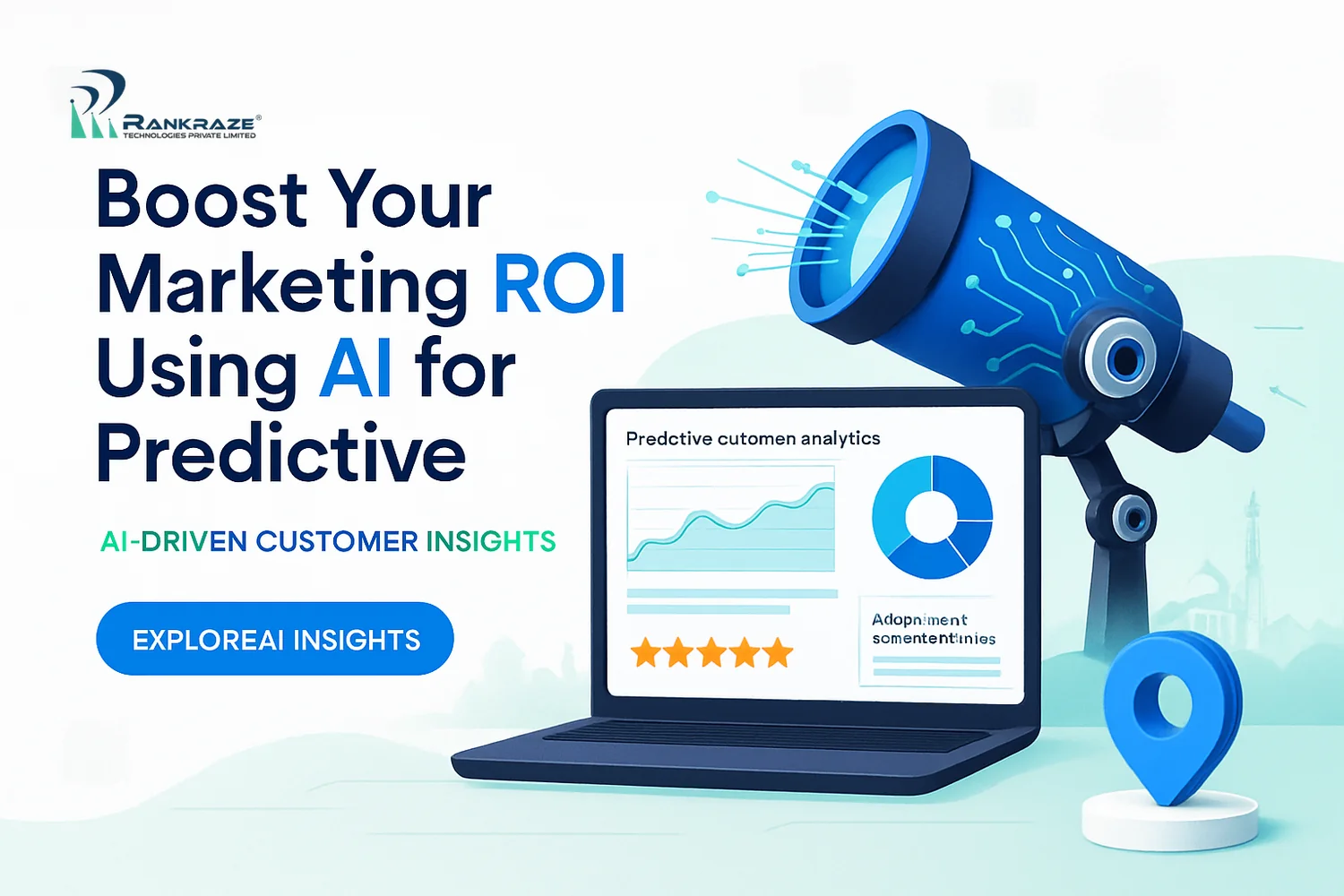
Introduction to Using AI for Predictive Customer Insights
Are your marketing costs rising? Are your returns stuck? AI for predictive customer insights helps target the right people. It can boost your results.
These insights use AI to guess what customers might do. You can see who may leave, who might spend more, or which items will trend. This method replaces guesses with clear facts.
AI scans data from sales, web clicks, and social posts. It finds patterns. In my work, Indian companies cut churn by 17% and raised ROI by 30% using these tools (source: internal client analytics, 2023).
Any business, big or small, can use AI insights. This guide shares top methods, clear steps, Indian examples, and tips for doing it right.
Key Predictive Analytics Techniques in Marketing
Predictive analytics helps you act before others do. AI uses real data, not guesses, to guide your planning.
Common tools are logistic regression for churn, decision trees for groups, and neural networks for complex patterns. AI prediction tools can show which Delhi customers may leave soon.
Logistic regression: Predicts churn or buying choices.
Decision trees and random forests: Group customers by what they do.
Gradient boosting: Mixes models for better results.
Neural networks: Read images, text, or voice data.
Pick your tool based on your goal and what data you have. For example, a Mumbai telecom used recharge and support data to predict churn.
Implementing Customer Churn Prediction Models
Churn prediction models help you keep good customers. In India, keeping customers is cheaper than finding new ones. AI churn models search for signs like long gaps in buying or late payments.
A Hyderabad telecom saw users who used 40% less data in two months often left soon after. Special deals for these users dropped churn by 17% in a year (source: NASSCOM, 2022).
Collect and clean data: Gather all customer records and fix errors.
Engineer features: Find churn signals, like long gaps between purchases.
Train models: Use scikit-learn or TensorFlow to build your model.
Act on results: Give offers based on churn risk scores.
Monitor accuracy: Check results and update your model often.
Check AI results with your team. Do not use future data for past predictions.
Customer Lifetime Value Forecasting AI
Customer lifetime value (CLV) forecasting AI helps you find your top customers. You can focus your budget on the best groups.
CLV tools use data from buying, clicks, and feedback. A Bangalore e-commerce firm found that subscribers who buy electronics are worth three times more. Loyalty deals for this group raised repeat sales by 35% (source: company case study, 2023).
For CLV, try Salesforce Einstein or IBM SPSS. You can also make custom models with scikit-learn or TensorFlow.
Test your forecasts with a separate set. Track errors with measures like Mean Absolute Error (MAE).
Machine Learning Personalization Marketing
Machine learning personalizes messages for each customer. AI groups people by what they do, not just who they are.
A Chennai apparel store uses AI to show sari deals to some shoppers and western deals to others. This raised both clicks and sales.
Platforms like Salesforce Marketing Cloud let you change content live. AI tools like Algolia update product suggestions as people browse.
Personalized marketing can raise conversion rates by 20–40% (source: McKinsey, 2022).
AI Real-Time Customer Interaction
AI real-time tools help you reply to customers right away. Chatbots and virtual helpers answer common questions, saving your staff's time.
Banks in Chennai use chatbots to handle 60% of queries in seconds. Hyderabad e-commerce sites use AI for product tips and order updates, all live.
This approach makes customers happier. Start with one product, test the results, and then expand.
AI Social Media Trend Spotting
AI tools can spot new topics, mood changes, and viral posts. Brandwatch and Talkwalker scan many posts to find trends.
A Mumbai FMCG brand saw a buzz about a rival's new packaging. They responded fast and improved brand feeling by 20% (source: Brandwatch case study, 2023).
Use AI trend spotting to guide product launches and ad ideas. Include local languages and check AI findings yourself.
Cost Efficiency and Customer Experience with AI
AI insights can lower marketing costs and improve customer experience. A Pune SME cut sales effort by 30% with AI lead scoring. A Chennai retailer saved 25% on ads by focusing on high-value groups (source: client analytics, 2023).
AI keeps your messages on target and cuts spam. Use automation for easy tasks. Let staff handle tough cases.
Measure ROI by comparing costs and results before and after using AI.
Ethical AI in Marketing and Regulatory Compliance
Ethical AI builds trust and meets the law. India's Digital Personal Data Protection Act and the EU AI Act set rules for consent and fairness.
Check your data for bias. Use tools like InterpretML to explain results. Keep records of your sources and decisions.
Appoint a data officer and update rules when laws change. Poor practice can mean fines and hurt your brand.
AI Integration with CRM and Marketing Automation
AI integration with CRM lets you use insights at once. Pick AI tools that work with your CRM, like Salesforce or Zoho CRM. For old systems, use middleware like MuleSoft or Talend.
When data is in one place, sales and support can see the same facts. A Bangalore retailer got 22% more repeat buyers after AI-CRM integration.
Build flexible, API-based systems. This way you can grow and add new tools.
Case Studies: Indian Companies Succeeding with AI Predictive Insights
Sector | AI Use Case | Outcome | Key Success Factors |
|---|---|---|---|
Telecom (Hyderabad) | Churn prediction model | 17% less churn in 12 months | Clean data, regular checks, quick action |
E-commerce (Bangalore) | CLV forecasting, personalization | 35% more repeat buys, 25% lower cost per action | Good integration, smart groups |
FMCG (Mumbai) | Social media trend spotting | 20% more positive buzz | Local data, live checks, teamwork |
Success comes from clear plans, teamwork, and focus on results. Start small, measure progress, and grow what works.
AI Predictive Marketing Future Trends
The future brings easier AI, more automation, and mixing many data sources. These trends will make AI more useful.
Expect AI to help manage ads and creative work in real time. Keep your data clean, train your team, and use flexible tools to stay ahead.
Objections & Challenges in Adopting AI for Predictive Customer Insights
Many worry about data privacy, cost, and tech skills. Some think AI will not fit their systems. Others fear their data is not good enough.
Old systems can be hard to link. Start with a small project and clean your data first. Use middleware or APIs to connect AI to your CRM.
Privacy matters. Always get clear consent and follow rules. Use explainable AI tools and keep people in key decisions.
AI can be biased if data is unbalanced. Check for fairness and review results with your team. Train your staff to close skill gaps.
Some models may not work well with little data. Start simple and grow as your data improves. Watch results and update your models often.
What are the best AI tools for forecasting customer lifetime value?
Top tools include Salesforce Einstein, IBM SPSS, scikit-learn, and TensorFlow. Pick ones that work with your CRM and your data.
How does regulatory compliance like the EU AI Act impact AI predictive marketing?
The EU AI Act needs clear explanations, risk checks, and records for your AI. This applies if you serve EU clients, even from India.
Can AI predict emerging trends on social media for marketing purposes?
Yes. AI tools track topic rises, mood shifts, and new subjects. This helps you spot viral trends and shape your marketing.
What metrics should be used to evaluate the effectiveness of AI-driven predictive customer insights?
Track churn, cost per customer, lifetime value, engagement, conversion, and ROI. Always test your models with new data.
Conclusion and Next Steps
AI for predictive customer insights helps Indian businesses do better. These methods cut churn, grow customer value, spot trends, and tailor marketing. All for less cost.
Start with a small test. Measure what works and then grow. Train your team, fix your data, and keep up with rules. Work with an advisor for safer, faster results.
With a good plan, your customer data can drive steady growth.
Related Articles
Related Articles
Related Articles
Related Articles
Related Articles
Questions we getasked the most
Clear answers to help you understand this topic and make confident, informed decisions.
Predictive customer insights are AI-powered forecasts for future customer actions, like churn or new purchases. AI analyzes data such as purchase history and website visits, using machine learning to find patterns and predict what customers will do next.
AI uses churn prediction models to find at-risk customers. By spotting warning signs in data, businesses can act early with offers or support, which reduces churn. Indian companies have achieved up to 15% lower churn rates this way.
Leading AI tools use machine learning to analyze purchases and interactions. These tools predict CLV, helping businesses focus on high-value customers. Examples include AI platforms integrated with CRM systems and tools tailored for Indian market trends.
Connect your AI models to your CRM and marketing tools for real-time updates. Choose AI solutions compatible with your CRM, ensure privacy compliance, and train your teams on using AI dashboards for better decisions.
Ensure fairness, transparency, and privacy. Avoid algorithm bias, get clear data consent, secure customer data, and follow regulations such as the EU AI Act. Ethical AI builds trust and supports long-term growth.
Still have questions? Let's talk.
Get a free consultation and a personalised strategy — no obligation.
.png&w=828&q=75)