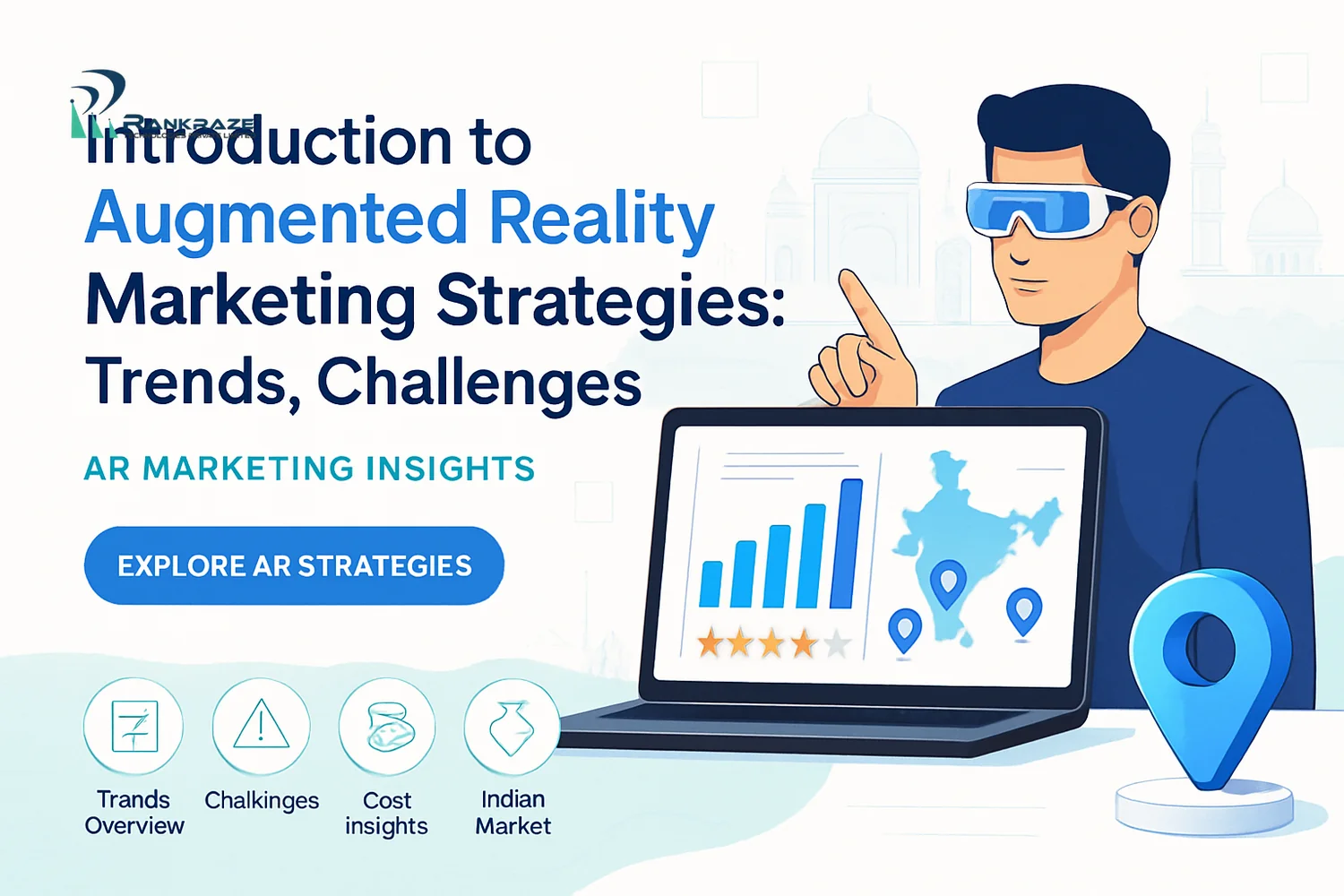
Introduction to Augmented Reality Marketing Strategies: Trends, Challenges, and Cost Insights for Indian Marketers
Understanding Augmented Reality Marketing: A Comprehensive Introduction
Augmented reality (AR) marketing helps Indian brands stand out in a crowded market. AR is no longer just for big tech companies. Today, Indian brands—from startups in Chennai to retail chains in Mumbai—use AR to improve business results.
AR marketing adds digital content, like 3D models or animations, onto the real world using a device’s camera. Unlike virtual reality (VR), AR does not replace your surroundings. For example, a shopper in Delhi can use their phone to try on lipstick virtually. A buyer in Bangalore can see how a sofa fits in their living room.
AR connects offline and online experiences. Instead of watching plain ads, customers can interact with products and change colors or features in real time. This helps Indian brands build trust and grab attention, especially in a price-sensitive market.
Introduction to Augmented Reality Technology
Success in AR marketing depends on knowing both hardware and software. AR is now easier to use because of smartphones and affordable tools.
Key AR tools include Google ARCore, Apple ARKit, Unity, and Vuforia. These help place digital objects in the real world, track movement, and manage how users interact.
Every AR campaign relies on three things: tracking, rendering, and interaction. Tracking finds where digital items should go. Rendering makes them look real. Interaction lets users control what they see. For example, an AR try-on for a Hyderabad jewelry brand finds the user’s face, adds a necklace, and lets users swap styles.
India’s AR growth is driven by mobile experiences. Many people have smartphones and enjoy camera effects. Platforms like Meta Spark and Snapchat Lens Studio help brands launch AR quickly for many users. For more complex projects, Unity or Unreal Engine offer advanced features but need skilled partners.
Recent AR advances include AI integration. Tools like facial recognition and object detection make experiences personal. For example, AI can match skin tones for beauty brands or track gestures for games, making users more engaged.
Current Augmented Reality Marketing Trends in India
AR marketing trends in India are changing quickly. Young people in cities like Bangalore and Delhi want immersive and easy brand experiences.
Popular trends include virtual try-ons for clothes and makeup, interactive demos for appliances and furniture, and gamified AR like festival filters. For example, big FMCG brands in Mumbai use AR Instagram filters during Diwali to boost engagement.
Location-based AR is growing. Auto brands offer 360-degree AR demos for buyers in Hyderabad. Beauty retailers in Bangalore provide real-time product previews. Social platforms help AR campaigns reach more people at a lower cost.
Even smaller brands in Tier 2 cities see good returns from AR demos. Engagement rates for AR often beat traditional banners or video ads.
AR Marketing Benefits for Brands
AR marketing gives brands higher engagement and better conversions. Customers can try on sunglasses or customize bikes instead of just looking at ads.
Hands-on interaction builds a stronger emotional connection and helps people remember the brand. A Nielsen study found AR ads can give up to 70% better memory retention than regular ads.
AR also boosts conversion rates. Indian e-commerce brands have seen “add to cart” rates double or triple after adding AR product views. Shoppers feel more confident, so they hesitate less before buying.
AR allows richer brand stories. Real estate developers in Pune use AR 3D walkthroughs, letting buyers explore properties before they are built. This works well in automotive, travel, and luxury retail too.
Finally, AR helps brands stand out online. Brands that use AR to solve real customer problems, not just for fun, see the best results.
AR Marketing Challenges and Limitations
AR marketing has some challenges. Technical compatibility is a big issue. Not all Indian consumers have the latest smartphones or fast internet, especially outside big cities. Test your AR on many devices and network speeds before launching.
Creating good content is another hurdle. High-quality 3D models and animations need special skills. Brands often forget the need for user testing and making changes based on feedback.
Budget is a concern. Custom AR app development and content creation can cost a lot. Start with simple AR filters to test your return on investment before spending more.
Cultural and language differences matter. India’s diversity means AR campaigns must be tailored for different regions and languages. Test your idea with your target audience before launching.
Cost of AR Marketing Campaigns in India
The cost of AR marketing campaigns depends on how complex and big they are. Simple AR filters for social media start at INR 50,000 to 1,00,000. Custom AR apps or advanced product views can cost from INR 5 lakh to 50 lakh, based on features and design.
Ongoing costs include content updates, user testing, and tracking analytics. Remember to include these in your AR budget.
Legal Issues in AR Advertising
Legal issues in AR advertising include privacy, consent, and intellectual property. Always tell users if you collect data or record through their camera. Follow India’s data protection laws and ask legal experts for complex campaigns.
Do not use copyrighted images, music, or trademarks in your AR content without permission. Check all creative assets for compliance before launching.
AR vs Other Marketing Technologies
AR is different from other marketing tools like VR, static banners, or video ads. Unlike VR, AR does not need special headsets and is easier for smartphone users.
Compared to static or video ads, AR offers interactive and personal experiences. This leads to higher engagement and better conversion rates, especially with younger people.
AR Marketing Case Studies in India
Several Indian brands have succeeded with AR. Lenskart’s AR try-on lets customers preview eyeglasses, increasing online sales and reducing returns. Nykaa uses AR for virtual makeup trials, leading to higher engagement and better conversions.
Tata Motors launched an AR showroom, letting customers explore vehicles in 3D from home. The campaign saw more time spent and more leads generated. These examples show how AR can drive business results.
User Experience Design in AR Marketing
Good user experience design in AR marketing focuses on being simple and easy to use. Plan clear steps for users—what they see first, how they interact, and what happens next. Use easy controls and clear instructions.
Design for many users and devices. Test your AR with people from different backgrounds and regions to make sure everyone can join in. Good design leads to higher engagement and better results.
AI Integration with AR Marketing
AI integration with AR marketing makes experiences more personal. For example, AI can match skin tones for beauty brands or detect hand gestures for games. This keeps users interested and coming back.
Brands using AI with AR see more repeat visits and higher retention. As AI gets better, AR campaigns will become even more personal.
Future of Augmented Reality Marketing
The future of AR marketing in India is bright. As smartphones get better and data networks improve, AR will reach more people. More brands will use AR for product demos, virtual events, and interactive ads.
AI integration and improved user experience will make AR campaigns smarter and easier to use. Brands that invest in AR now will be ahead as the technology becomes common.
Common Objections and Challenges for Indian Marketers
Indian marketers often worry about high costs, technical barriers, and uncertain returns. Lack of skilled AR developers can slow progress, especially for small businesses. Cultural and language differences add more challenges to campaign design.
To overcome these, start small with pilot campaigns. Use ready-made AR platforms for quick launches and work with experienced agencies to fill skill gaps. Test ideas with local audiences to make sure they work.
Summary and Next Steps
Augmented reality marketing helps Indian brands engage customers, boost conversions, and stand out. Start with simple AR experiences, measure results, and grow as you learn. Focus on user experience and local needs for the best results.
Check out other resources on AR marketing strategies for Indian marketers to learn more and plan your next campaign.
FAQs
- What is the cost of AR marketing campaigns in India? Basic AR filters cost around INR 50,000–1,00,000. Custom apps can cost several lakhs, depending on features.
- What are the main AR marketing benefits for brands? Higher engagement, better conversion rates, and improved brand recall.
- What are the key AR marketing challenges and limitations? Technical compatibility, content creation costs, and cultural adaptation are major hurdles.
- How can Indian brands get started with AR marketing? Start with simple AR experiences on social media, test with your audience, and scale based on results.
- How does AR compare to other marketing technologies? AR offers interactive, personalized experiences that outperform static ads and videos in engagement.
Related Articles
Related articles will be automatically injected by the pipelineRelated Articles
- Step-by-Step Video Production Techniques for Marketing Video
- The Complete Guide to Building Brand Identity for Startups w
- Step-by-Step Guide to Designing Responsive Corporate Website
- Step-by-Step Guide to Pay Per Click Advertising Campaigns in
- How AI Services Boost Performance and ROI for Digital Agenci
- SEO Cost in India in 2026
- Best Digital Marketing Strategies for Real Estate, Healthcar
- Local SEO Checklist for Chennai Businesses
- Digital Marketing Cost in Chennai
- How to Rank #1 on Google Maps in 2026 (Complete Local SEO Gu
.png&w=828&q=75)