#1 SEM Company in Chennai
a AI driven
SEM Company in Chennai That Drives Real Business Growth
Turn high-intent Google searches into measurable business opportunities with structured search campaigns — from keyword research and ad creation to landing page optimization and continuous ROI tracking.
Google Search Ads
High-Intent Search
Performance Max
AI Cross-Channel
Google Shopping
E-Commerce Catalog
Remarketing Ads
Re-engage Visitors
Trusted by 2,000+ world-class brands and organizations of all sizes
Why Your Google Ads Campaign May Not Be Delivering
Launching an ad is easy.
Building a paid-search campaign that consistently attracts the right people and converts them is different.
Your Campaign Can Lose Money When:
Common structural flaws that drain ROI in unoptimized paid search accounts.
Keywords are too broad
Targeting broad match keywords without intent boundaries wastes your ad spend on non-converting audience segments.
Search terms don't match your business
Paying for search queries that are loosely related to your offer, driving high bounce rates and low lead volume.
Negative keywords are missing
Without robust negative keyword lists, your ads show up for irrelevant search variations that drain daily budgets.
Ads don't match the user's intent
Generic ad copy leads to low Click-Through Rates (CTR), poor Quality Scores, and higher Cost-Per-Click (CPC).
Landing pages are weak
Ad clicks drop off when landing pages lack clear headlines, trust signals, and direct call-to-actions.
Conversion tracking isn't configured correctly
Operating without precise goal tracking leaves you blind to which campaigns generate actual revenue.
Budget is allocated to low-performing campaigns
Spreading budget thin across underperforming ad sets starves your highest-converting campaigns of capital.
Bids are optimized without considering conversion quality
Chasing maximum click volume instead of bid strategies tuned for high-intent, qualified business leads.
Reports focus on clicks instead of business outcomes
Relying on vanity metrics like impressions and clicks rather than Cost-Per-Acquisition (CPA) and ROI.
A Strong SEM Strategy Connects Every Part of the Journey
Single-point optimization fails. Our end-to-end framework ensures zero drop-off between user intent and revenue output.
That is the system Rankraze focuses on.
Stop losing paid search budget. Get a comprehensive campaign audit & strategy tailored to your growth.
Our SEM Services in Chennai
We build and manage paid-search campaigns around your business objective, target audience, budget and conversion path.
Google Search Ads
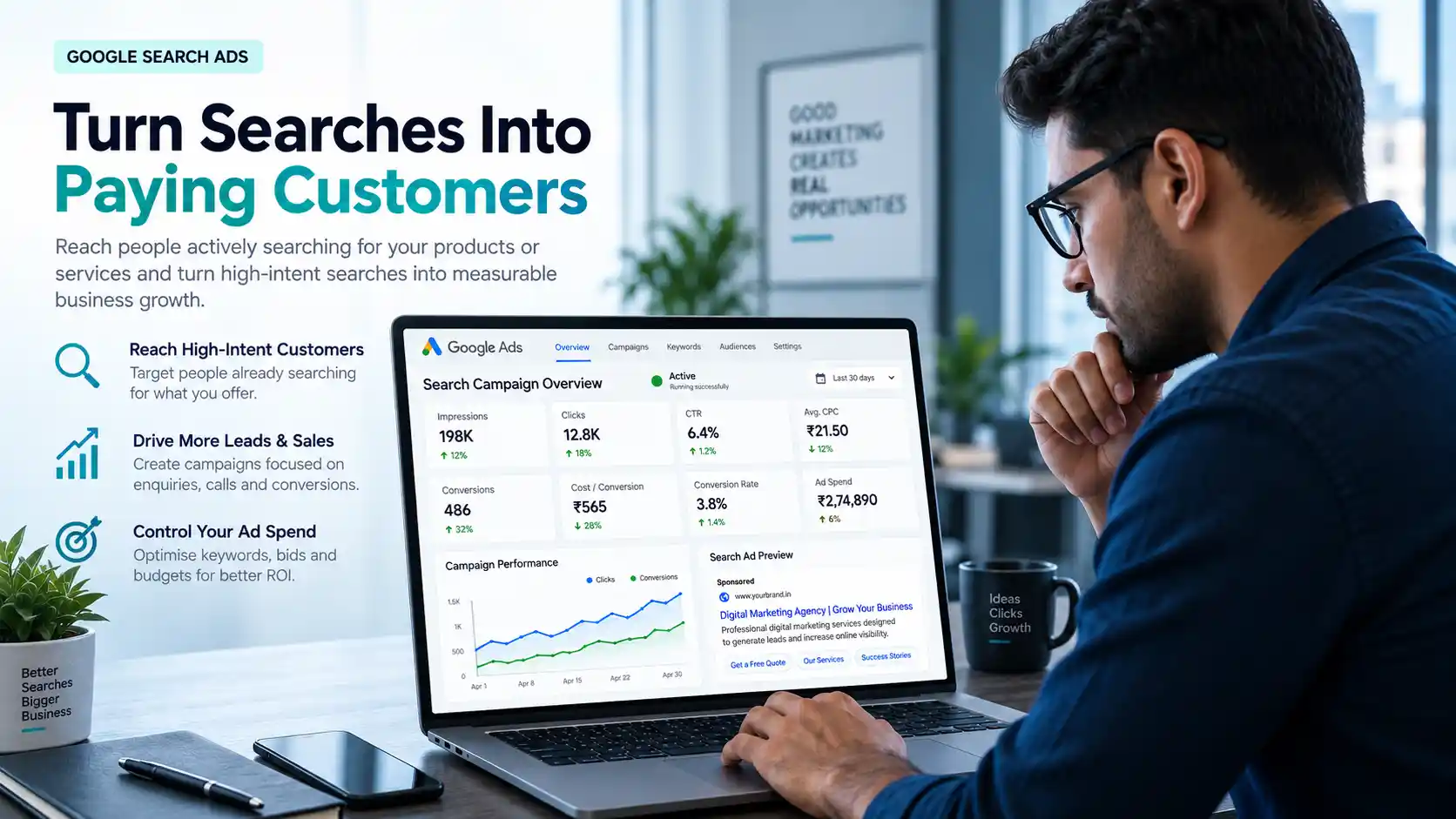
Google Search Ads
Reach customers when they are actively searching for what you offer. We structure search campaigns around relevant commercial and high-intent keywords, develop ad messaging around the user's intent, manage bids and continuously refine search-term targeting.
Includes:
- Keyword research
- Campaign and ad-group structure
- Ad copy creation
- Match-type strategy
- Negative keyword management
- Bid optimization
- Search-term analysis
- Conversion tracking
Google Display Ads
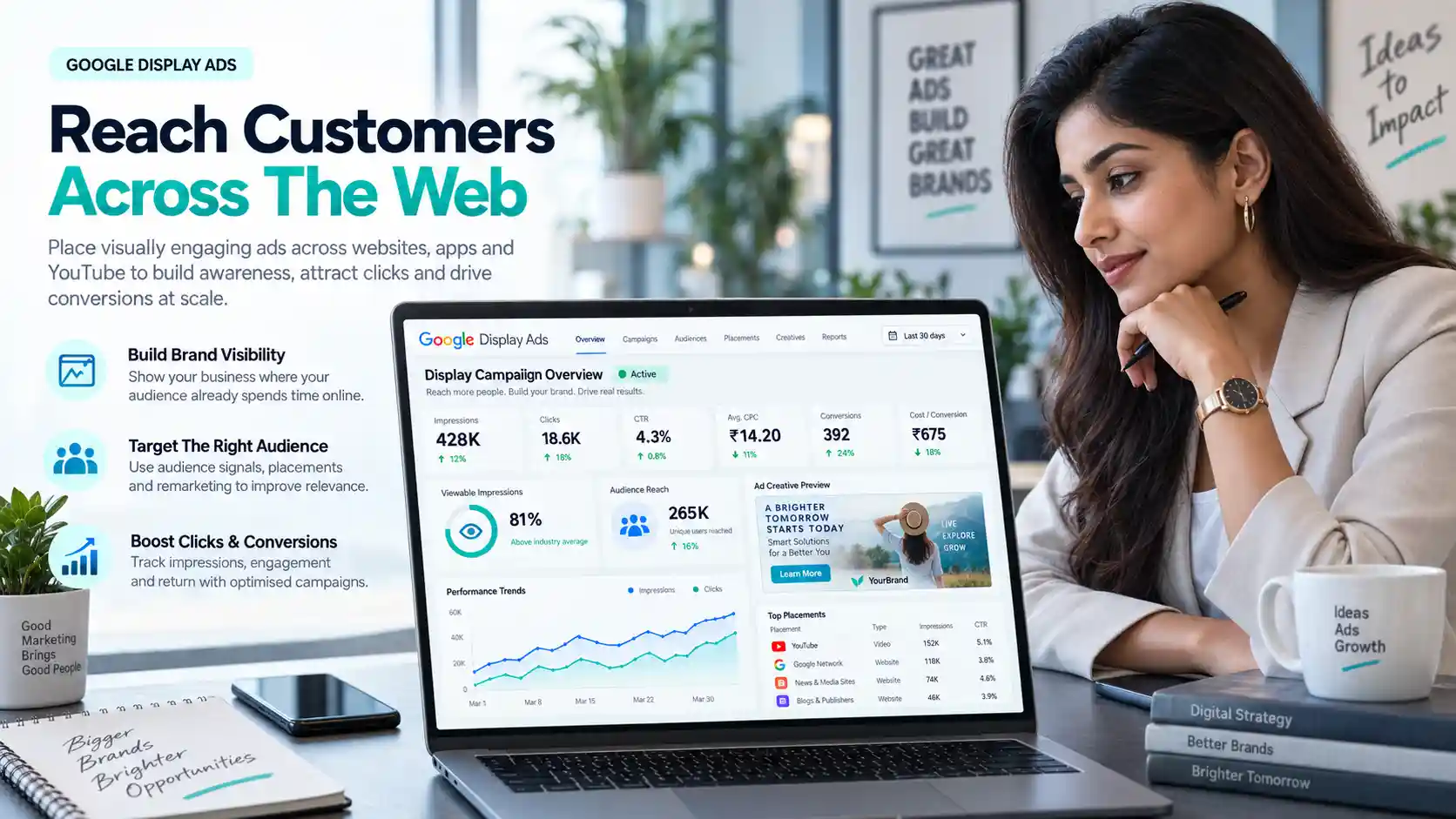
Google Display Ads
Stay visible beyond the search results. Display campaigns can support awareness, remarketing and audience-based targeting when search alone is not enough to reach the right prospects. We can plan audiences, creative requirements, placements and campaign objectives based on the role Display needs to play in the overall strategy.
Useful for:
- Brand awareness
- Remarketing
- Product promotion
- Audience expansion
- Supporting longer buying journeys
Google Shopping Ads
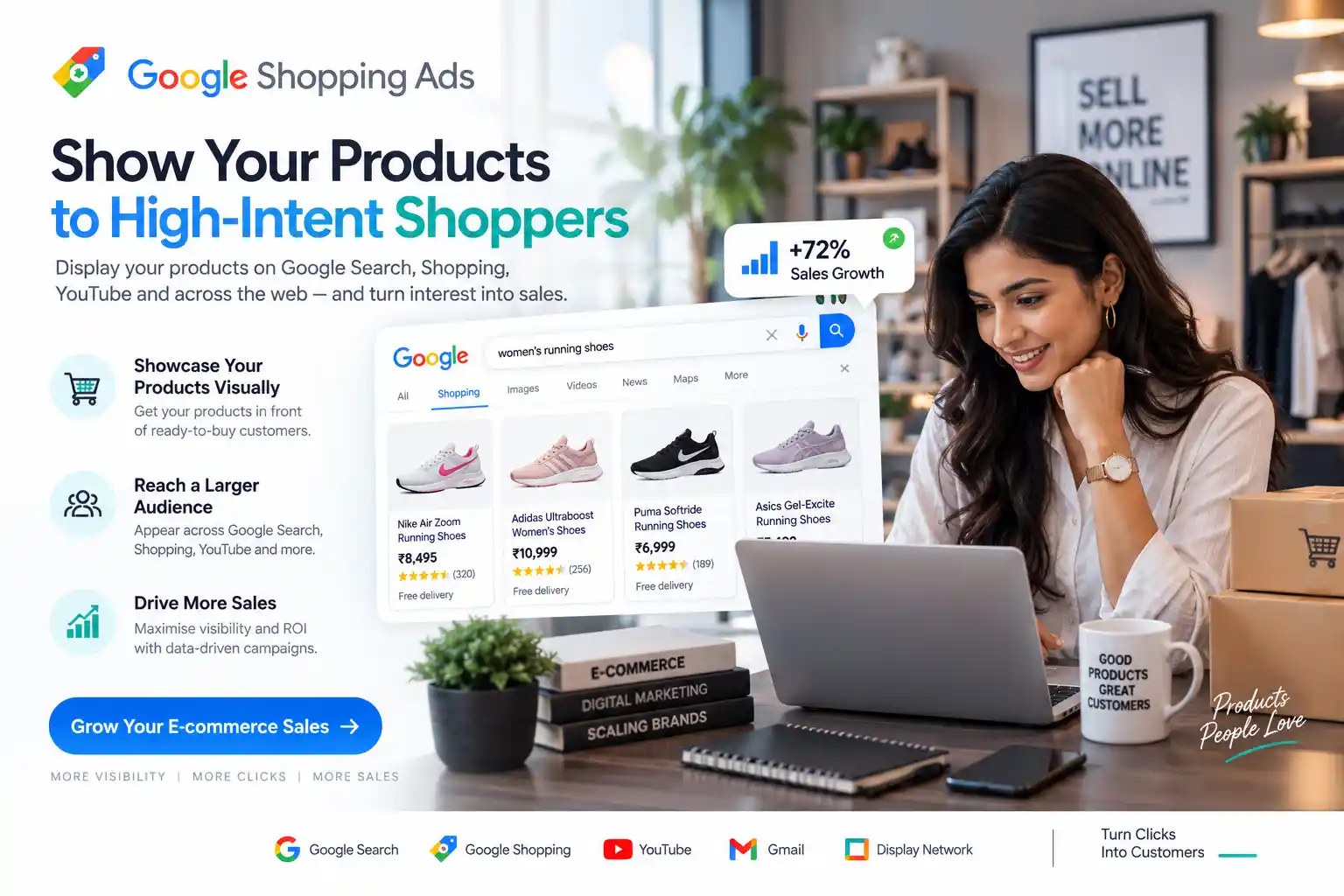
Google Shopping Ads
Put products in front of shoppers who are already looking to buy. For e-commerce businesses, Shopping campaigns can showcase product information directly within Google's shopping experience.
Campaign management can include:
- Product-feed review
- Product grouping
- Campaign structure
- Budget allocation
- Search-term analysis
- Performance monitoring
- Conversion tracking
Performance Max Campaigns
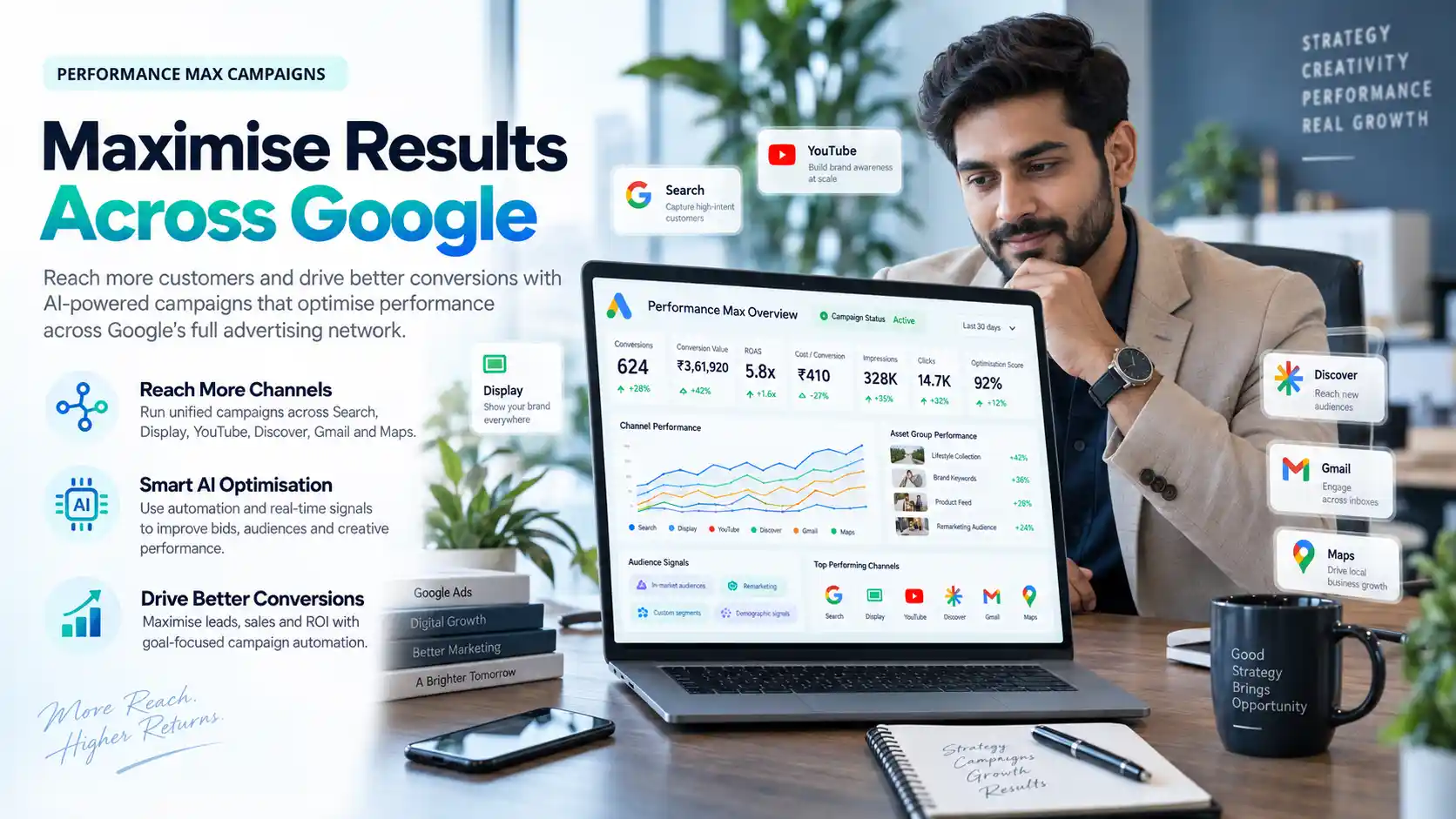
Performance Max Campaigns
Use Google's automated campaign inventory with a clear business objective. Performance Max can access multiple Google properties from a single campaign type. The important question is not simply whether to use Performance Max — it is whether it fits your business setup.
Key evaluation areas:
- Conversion goals
- Target audience fit
- Product/service suitability
- Existing campaign structure
- Available creative assets
- Measurement setup
Remarketing & Retargeting
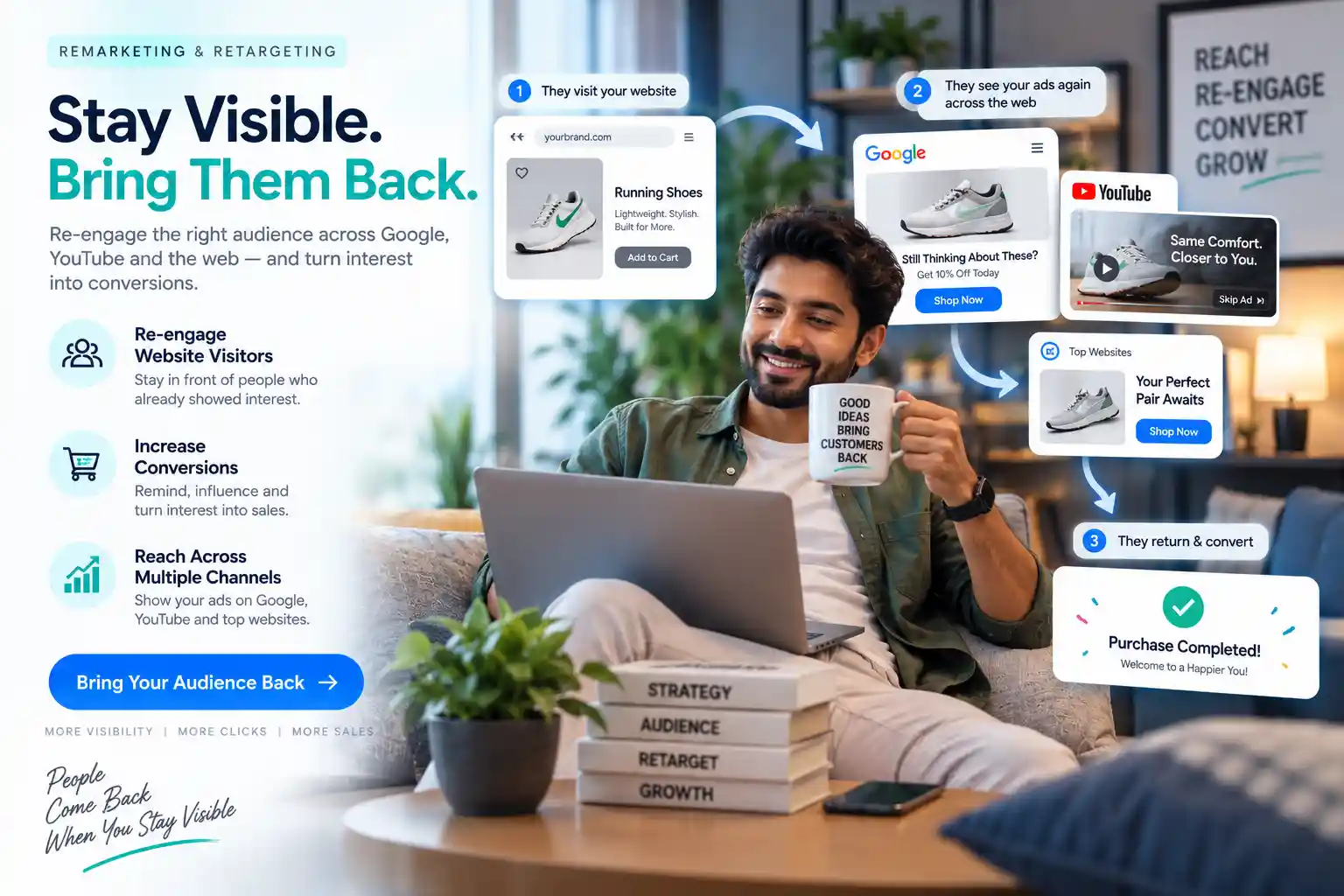
Remarketing & Retargeting
Bring interested visitors back into the conversation. Not every visitor converts during their first session. Remarketing can help reconnect with users who have already interacted with your website or other relevant assets.
Audiences can be developed around:
- Website visitors
- Product viewers
- Lead-page visitors
- Previous converters
- Engaged users
Landing Page Optimization
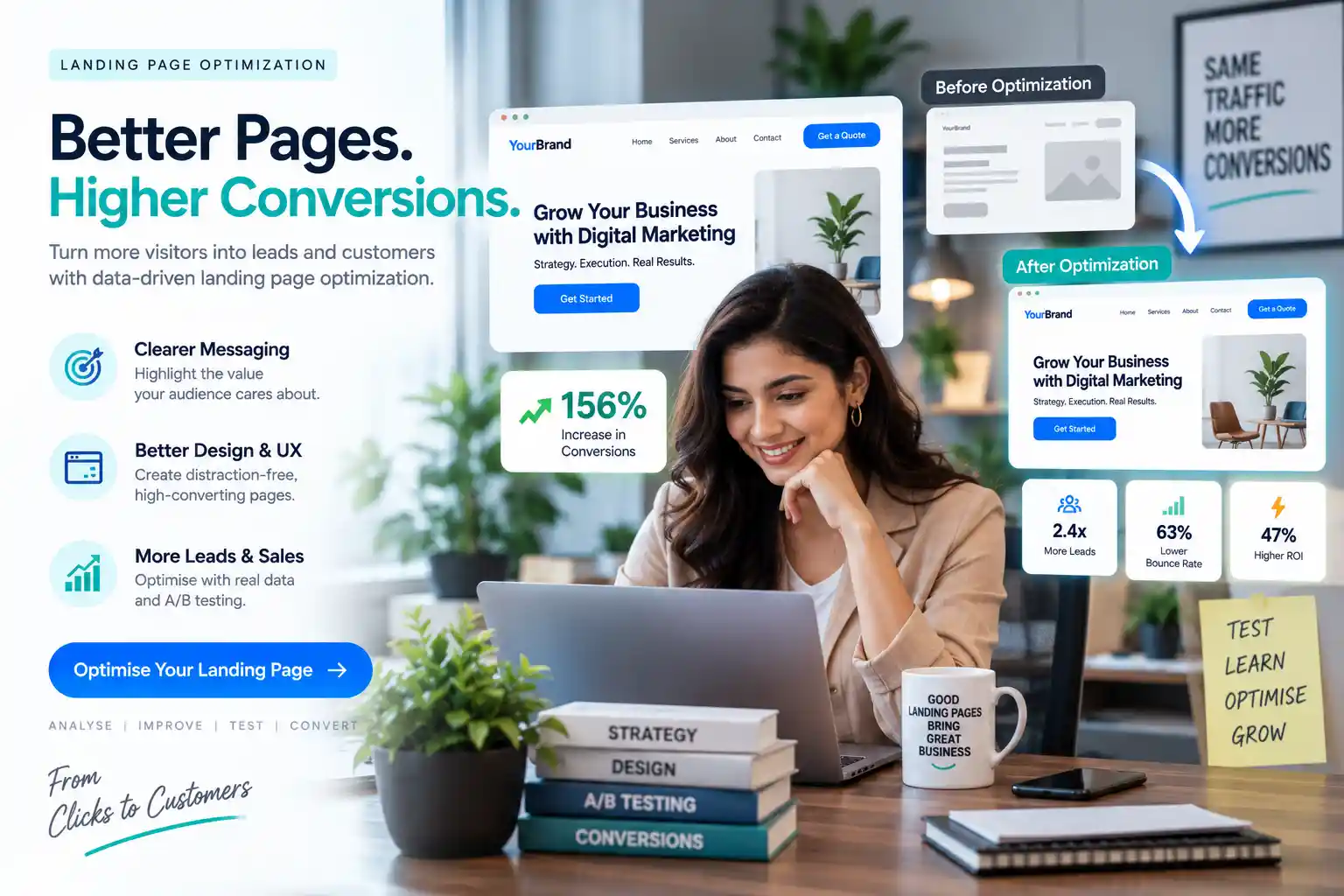
Landing Page Optimization
A good ad cannot compensate for a poor destination page. When a paid campaign sends users to a page that is slow, unclear or poorly aligned with the ad, conversion performance can suffer.
We review landing pages around:
- Message match
- Headline clarity
- Offer presentation
- CTA placement
- Trust signals
- Form friction
- Mobile experience
- Page speed & tracking
Conversion Tracking & Analytics
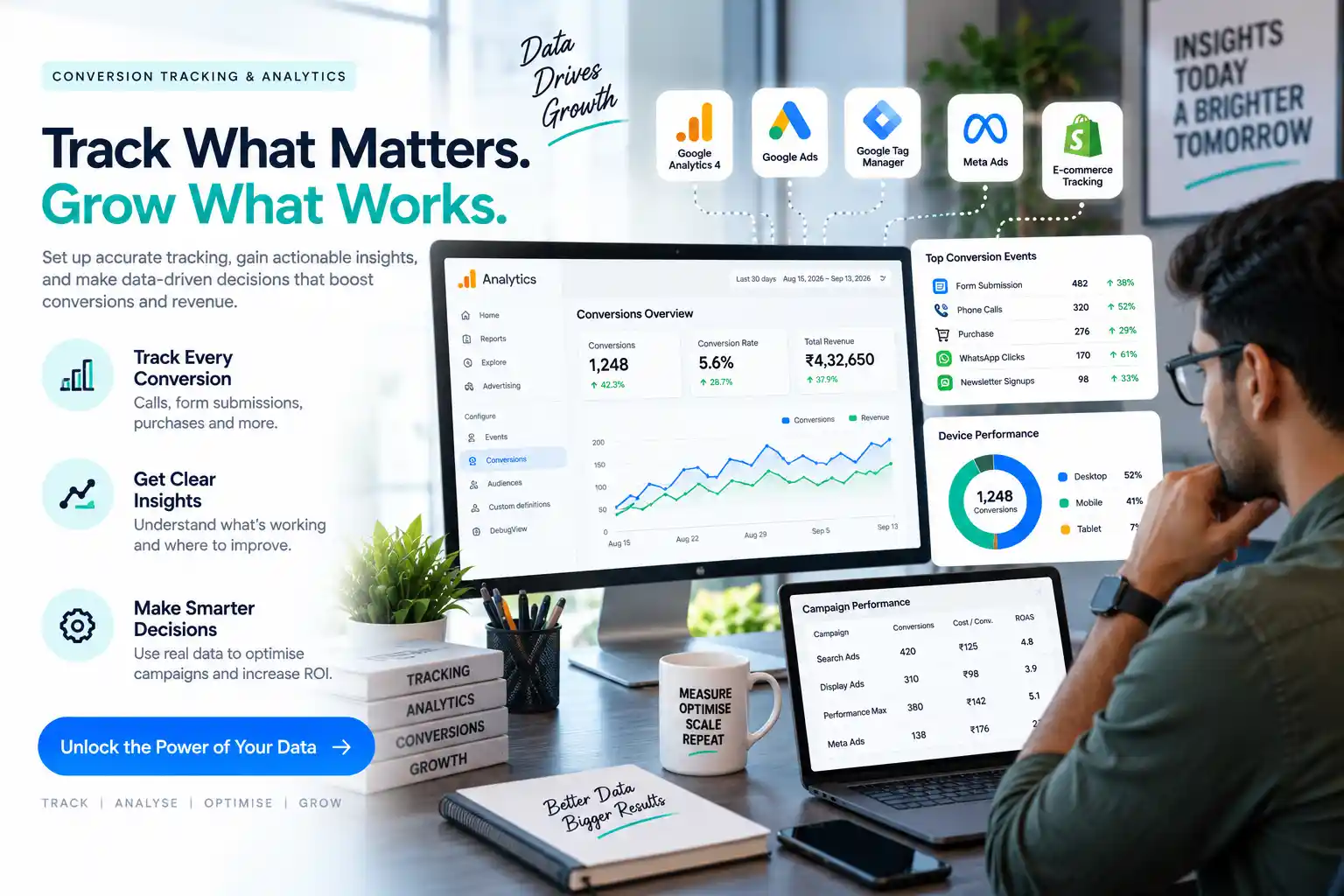
Conversion Tracking & Analytics
Know what your advertising actually produces. Clicks and impressions tell you what happened at the advertising level. Conversions help you understand whether the campaign is creating meaningful business actions.
Tracking can be structured around relevant actions such as:
- Form submissions
- Phone calls
- Enquiries
- Purchases
- Sign-ups
- Bookings
- Downloads
- Defined business conversions
PPC Campaign Management
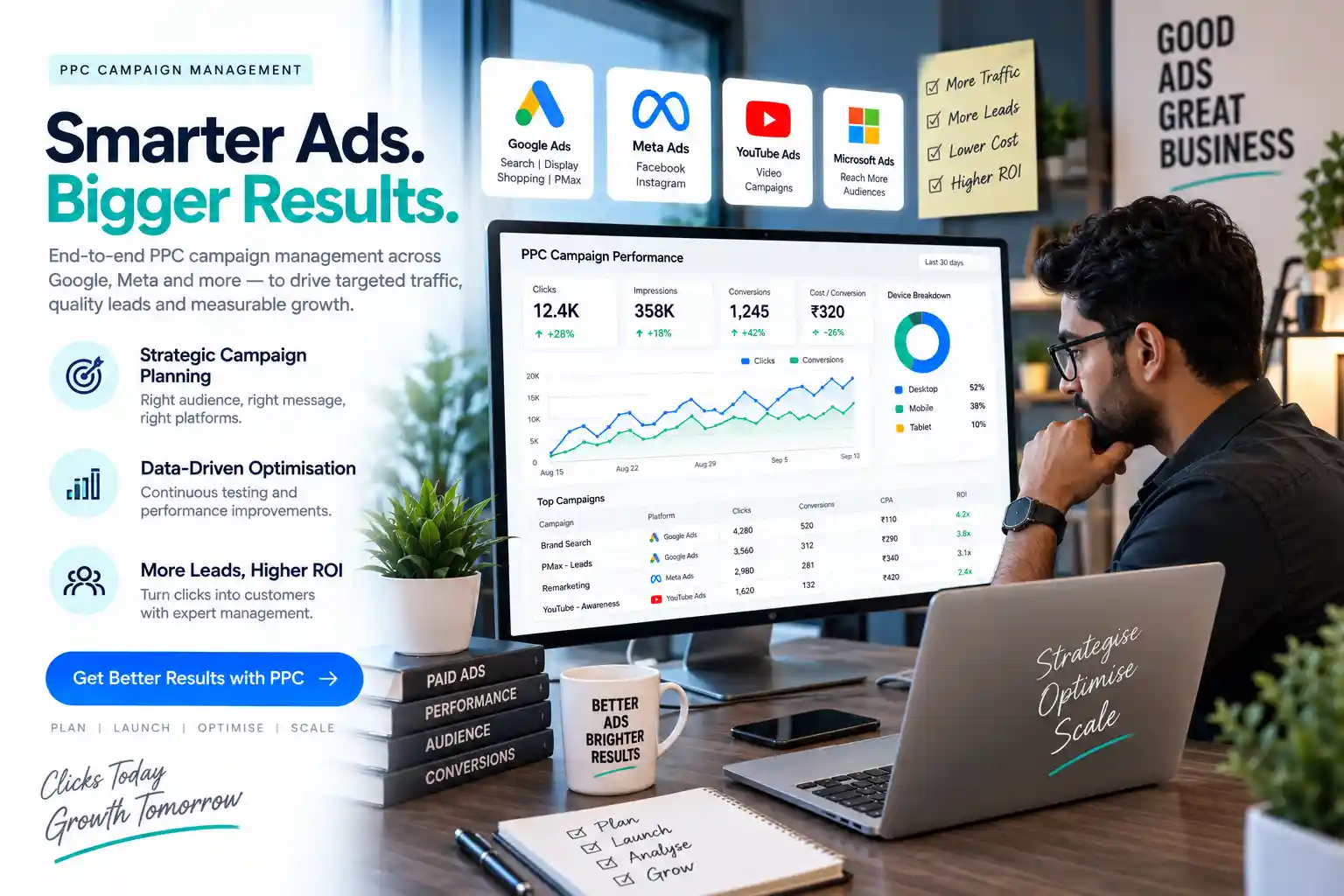
PPC Campaign Management
Manage the campaign continuously instead of treating launch as the finish line. PPC management identifies what is producing useful outcomes and improves campaign performance based on evidence.
PPC management can include:
- Campaign setup
- Keyword research
- Ad creation
- Bid management
- Search-term analysis
- Negative keywords
- Budget allocation
- Conversion tracking
- Landing-page recommendations
- A/B testing
- Performance reporting
- Continuous optimization
Which Paid Search Strategy Does Your Business Need?
Not every business should run the same campaign structure.
Lead Generation
Prioritize high-intent search campaigns, focused landing pages and conversion tracking when your primary objective is enquiries.
- Healthcare
- Education
- Real estate
- Professional services
- B2B services
- High-intent enquiries
E-commerce
Shopping campaigns, search campaigns, remarketing and product-focused landing experiences can work together when the goal is online sales.
- Revenue
- Conversion rate
- Acquisition cost
- Target ROAS
- Product feeds
- Shopping ads
Local Businesses
Local-intent search campaigns can help businesses reach people actively looking for a nearby service.
- Direct calls
- Enquiries
- Direction requests
- Qualified local leads
- Local search ads
- Geo-targeting
B2B
B2B paid search often requires tighter keyword qualification because high search volume does not necessarily mean high commercial value.
- High-intent queries
- Relevant business audiences
- Strong landing pages
- Lead qualification
- Conversion quality
- Account targeting
New Product or Service Launch
Paid search can help capture existing demand while the business builds longer-term organic visibility.
This is particularly useful when the business cannot wait for SEO to mature before testing market demand.
- Capture existing demand
- Fast market testing
- Immediate search visibility
- Validate keyword intent
- SEO bridge strategy
- Rapid demand insights
SEM vs SEO: Which Should You Use?
SEM and SEO solve different parts of the search-marketing problem.
SEM / Paid Search
Immediate Demand Capture- Speed to TrafficCan generate traffic shortly after campaign launch.
- Investment StructureBudget is directly tied to advertising clicks and impressions.
- Targeting ControlStrong control over keywords, demographics, scheduling and campaign settings.
- Strategic PurposeHighly useful for immediate demand capture and fast market testing.
- Traffic ContinuityStops generating paid traffic as soon as active ad campaigns stop.
SEO / Organic Search
Long-Term Authority Growth- Speed to TrafficUsually requires sustained effort over time to build Google rankings.
- Investment StructureNo direct cost payment for each organic click from search engines.
- Optimization FocusStrong focus on content relevance, domain authority and technical quality.
- Strategic PurposeUseful for building compound, long-term organic search visibility.
- Traffic ContinuityOrganic rankings & visibility can continue after active optimization.
The Hybrid Strategy Approach
The right answer is not always SEM or SEO alone. For many businesses, paid search captures immediate transactional demand while SEO builds longer-term organic domain visibility.
How We Manage SEM Campaigns
A structured, data-driven methodology designed to convert high-intent searches into measurable revenue.
Business & Goal Discovery
The campaign structure should follow the business objective. We first understand your commercial model and targets.
- What you sell
- Who you want to reach
- Where you operate
- What action matters
- Your sales process
- Your budget & expectations
- Your current performance
Keyword & Competitor Research
The goal is not to buy every available keyword — it is to identify the searches most relevant to the business.
- Commercial search terms
- High-intent keywords
- Relevant variations
- Negative keyword opportunities
- Competitor ad messaging
- Search demand volume
- Landing-page requirements
Campaign Architecture
We structure campaigns and ad groups logically to make campaign performance easy to analyze and optimize.
Connected Flow:
Logical ad group separation prevents budget drain across unrelated search themes.
Ad Creation & Landing Page Alignment
Ad messaging should reflect the searcher's intent. The landing page should then continue that same message.
Connected Flow:
Creates a seamless conversion path instead of sending every click to a generic homepage.
Tracking & Launch
Before scaling spend, conversion tracking is verified against the actual business actions that matter.
Once launched, live performance data becomes the foundation for continuous optimization.
- Goal & event verification
- Phone call & form tracking
- Revenue & lead attribution
- Baseline performance data
Monitor, Test & Optimize
SEM should be treated as an ongoing optimization process rather than a one-time setup.
- Search-term analysis
- Negative keywords
- Bid adjustments
- Budget reallocation
- Ad copy testing
- Landing-page improvements
- Audience refinement
- Campaign restructuring
Ready to Build Your Paid Search Architecture?
Get a custom SEM strategy and account audit tailored to your business goals.
From Clicks to Conversions: What We Measure
A paid campaign can generate thousands of clicks and still fail to produce enough business value. We therefore look beyond surface-level metrics.
Visibility
Tracking initial search presence and brand exposure across target queries.
- Impressions
- Search visibility
- Reach
Traffic Quality
Evaluating visitor relevance, ad engagement, and search term alignment.
- Click-through rate (CTR)
- Search terms
- CPC (Cost per click)
- Engagement
Conversion
Measuring direct commercial actions taken by website visitors.
- Leads
- Calls
- Purchases
- Conversion rate
- Cost per conversion (CPA)
Business Outcome
Measuring actual commercial value, customer acquisition cost, and revenue ROI.
- Qualified leads
- Revenue
- ROAS (Return on Ad Spend)
- Customer acquisition cost (CAC)
* The exact KPI framework depends on your specific campaign objective and business model.
Why Rankraze as Your SEM Company in Chennai?
A holistic, data-driven approach connecting paid search with wider digital capabilities, conversion tracking, and landing page performance.
SEM Is Part of a Wider Digital Strategy
Rankraze operates across SEO, paid advertising, social media, web development, analytics and other digital capabilities. This allows paid search to be considered alongside the other channels affecting the customer's journey rather than in isolation.
Campaign Decisions Are Based on Data
Rankraze's approach is data-driven, leveraging industry-leading analytics and search intelligence tools across its broader digital marketing operations.
Landing Pages Matter Too
Paid traffic only creates an opportunity. The destination page still needs to communicate the offer, build trust and make the next action clear. That is why landing-page quality should be considered as part of SEM performance.
Conversion Tracking Is Part of the Strategy
A campaign should be evaluated against meaningful business actions, not just clicks. Tracking allows optimization decisions to be based on actual conversion data.
Experience Across Different Business Categories
Rankraze has worked with businesses across diverse sectors. The campaign structure is always customized to the specific business, audience, and unit economics.
Partner with a Data-Driven SEM Agency in Chennai
Get a customized paid search proposal aligned with your sales economics and growth targets.
Real Campaign Experience
Rankraze's published case studies include paid-media campaigns with reported business outcomes.
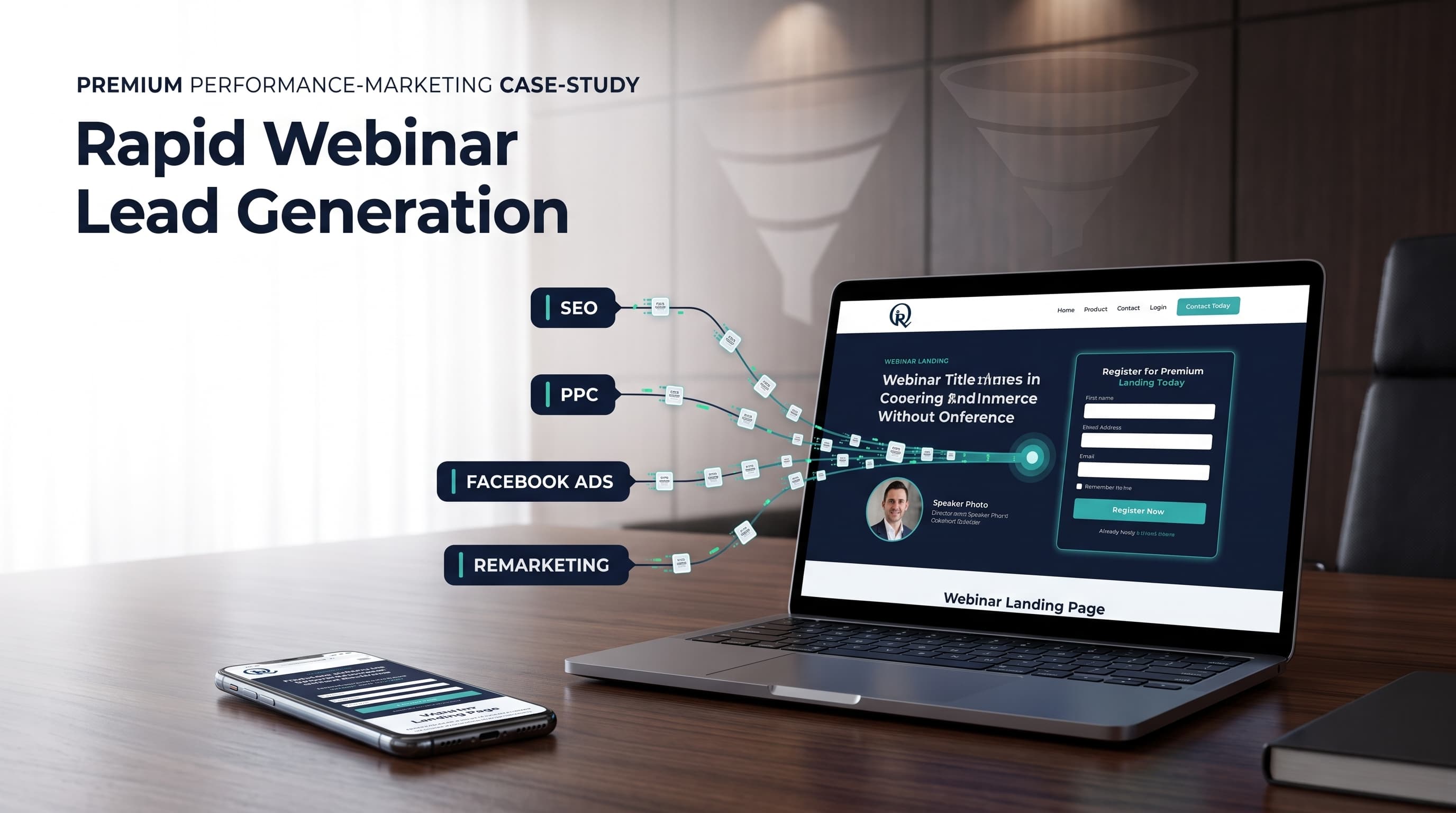
IRQS
Rankraze's published case-study material reports more than 1,000 qualified leads within 10 days and ₹1Cr+ revenue through PPC campaigns for IRQS.
1,000+
Leads Generated
₹1Cr+
PPC Revenue
10 Days
Timeframe
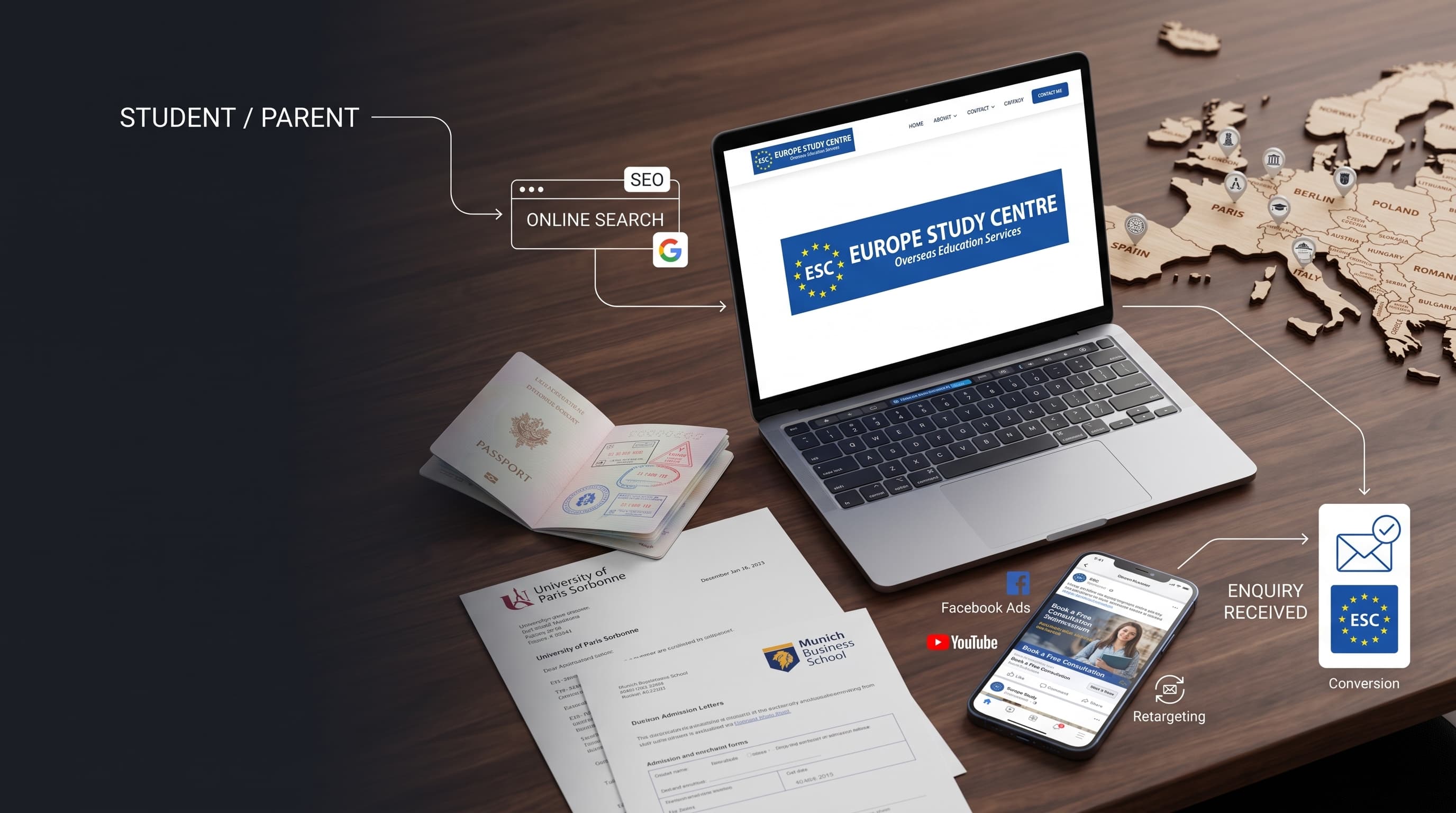
Europe Study Centre
Rankraze reports ₹4Cr+ revenue, 21,000+ student and parent leads and 24x ROAS for Europe Study Centre's broader digital campaign. The campaign included multiple channels, so these figures should not be presented as SEM-only results.
₹4Cr+
Total Revenue
21,000+
Student Leads
24x
Campaign ROAS
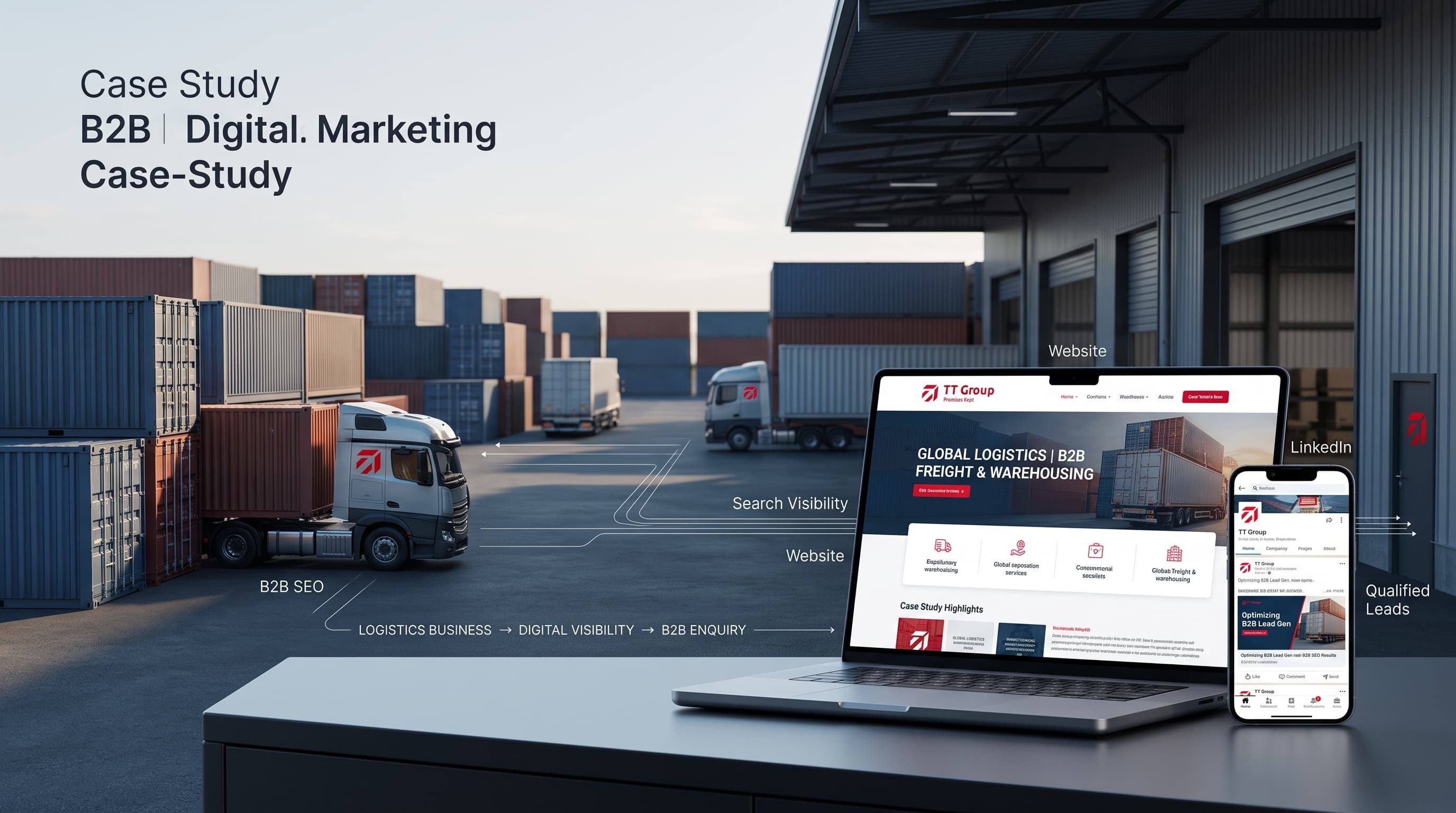
TT Group
Rankraze's published case-study material reports 300+ high-quality leads per month and ₹2.6Cr revenue within six months for TT Group's broader digital strategy, which included Google Ads, SEO, social media and website work.
300+
Monthly Leads
₹2.6Cr
Total Revenue
6 Months
Duration
Who We Help
Tailored paid-search campaign structures for diverse business models and commercial objectives.
Local Businesses
Capture high-intent searches from customers looking for nearby services.
B2B Businesses
Target commercial searches while filtering irrelevant traffic and focusing on qualified enquiries.
Education
Promote courses, programs, admissions and information sessions.
Healthcare
Reach users actively searching for relevant treatments, services or providers, subject to advertising policies.
Real Estate
Capture property, project and location-specific search demand.
E-commerce
Use Shopping and search campaigns to support product discovery and sales.
IT & SaaS
Reach businesses and decision-makers searching for specific solutions.
Don't See Your Industry Listed?
We build custom paid-search strategies tailored to your unique market demand and target buyers.
Frequently Asked Questions
SEM stands for Search Engine Marketing. In this page's context, it refers primarily to paid advertising on search engines, particularly paid search campaigns such as Google Ads. SEM can involve keyword targeting, ad creation, bidding, campaign management, conversion tracking and optimization.
SEM uses paid advertising to gain visibility in search results, while SEO focuses on improving organic visibility. Paid search can provide traffic once campaigns are active, while SEO generally takes longer to build but can provide longer-term organic visibility.
An SEM company plans and manages paid-search campaigns for businesses. This can include keyword research, campaign structure, ad copy, bidding, negative keywords, landing-page optimization, conversion tracking, reporting and ongoing optimization.
The terms are often used together, particularly when discussing paid search. PPC describes the pay-per-click advertising model, while SEM is a broader term for search-engine marketing. In the commercial agency context, businesses searching for SEM services often mean Google Ads/PPC management.
Paid campaigns can begin generating impressions and clicks after launch, but meaningful business results depend on factors such as search demand, competition, budget, offer, landing-page quality and tracking. Initial data should be used to identify what needs refinement rather than assuming the first campaign version will be optimal.
There is no single SEM price that fits every business. Cost depends on the advertising budget, competition, keywords, campaign types, number of campaigns, management scope and business objectives. Agency fees and media spend should also be considered separately when evaluating the total investment.
That depends on the business objective. SEM can be useful when you need immediate access to paid search demand, while SEO is designed to build organic visibility over time. Businesses with sufficient budget and a longer growth horizon may use both, with each channel performing a different role.
Yes. Small businesses can use paid search when there is sufficient relevant search demand and the economics make sense. Campaigns should be tightly targeted, conversion tracking should be configured properly, and budget should be concentrated on searches that are commercially relevant rather than spread too broadly.
Yes. Search Ads and Shopping Ads can serve different objectives. Search campaigns are commonly used to capture keyword-driven demand, while Shopping campaigns can showcase eligible products to users searching for products. The appropriate mix depends on the business model and available inventory.
Possible causes include irrelevant search terms, weak ad-to-page message alignment, poor landing-page experience, unclear offers, weak CTAs, incorrect conversion tracking or low commercial intent in the traffic. The campaign should be reviewed as a complete funnel rather than optimizing only the click-through rate.
Conversion tracking should be part of a properly managed SEM campaign. The exact events depend on the business, such as forms, calls, purchases, bookings or other meaningful actions. Tracking allows campaign decisions to be based on actual conversion performance.
Yes. Paid search can capture immediate demand while SEO develops organic visibility. Search-query and conversion data from paid campaigns can also provide useful insights for broader search strategy, while SEO can build long-term visibility for relevant topics.
Still have questions about SEM? Let's talk.
Get a free consultation and a personalized paid search strategy — no obligation.
Recent Blogs
.jpg&w=3840&q=75)
How to Use AI Content on Your Website Without Hurting SEO
AI can help you create website content faster, but publishing everything it generates is not a good SEO strategy. Many businesses use AI to write blog...
.png&w=3840&q=75)
Why Your Website Gets Traffic but No Leads: 10 Common Reasons and How to Fix Them
Imagine spending money on SEO for six months. Your website starts appearing on Google, impressions increase, and visitors begin arriving every day. Wh...
How AI Is Changing SEO in 2026 | AEO and GEO Strategies
I have noticed one big change in digital marketing. People no longer search only for websites. They ask detailed questions, compare businesses and use...