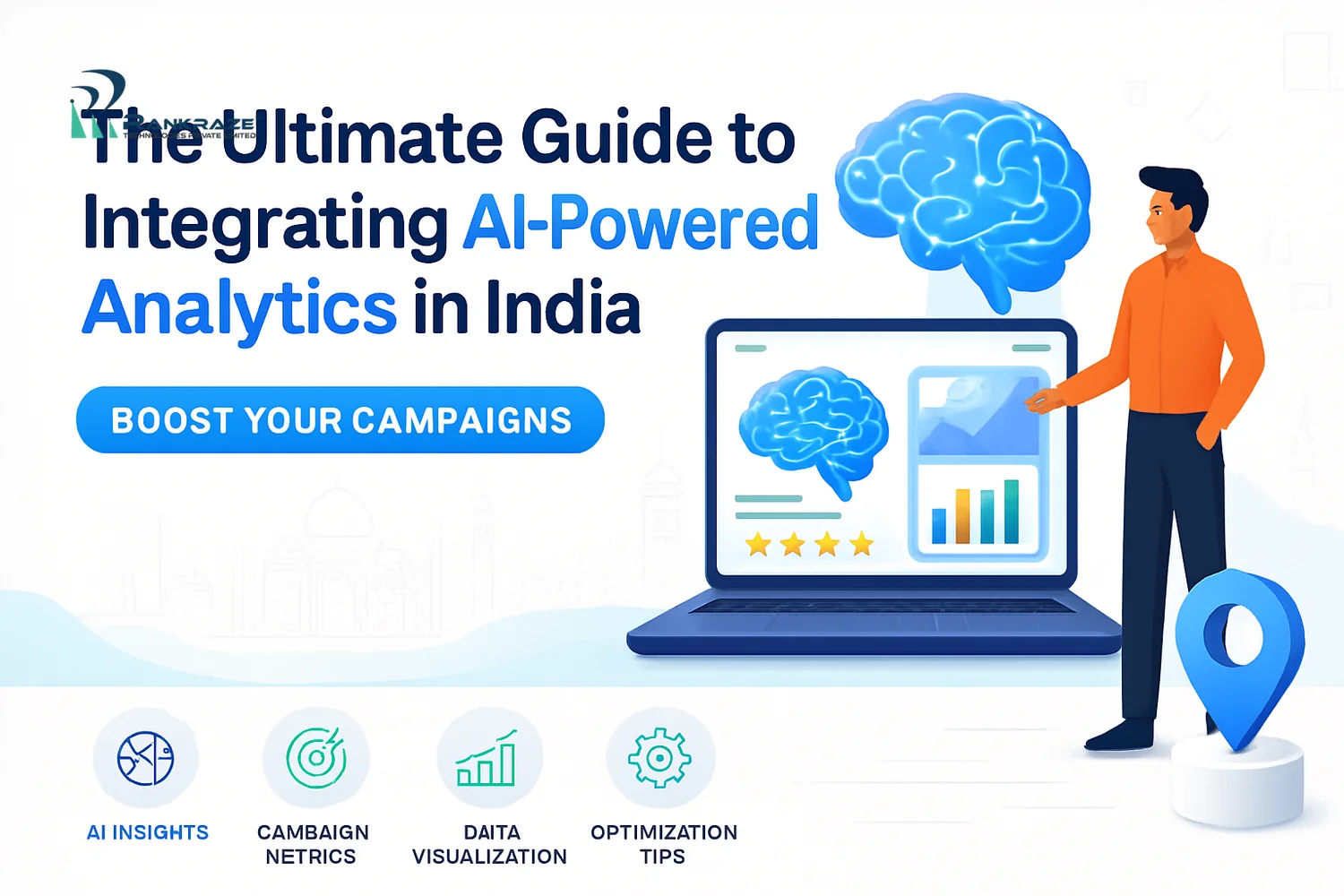
Introduction: AI-Powered Analytics in Digital Marketing
AI-powered analytics is now a must for Indian marketers. Brands that use data to make quick decisions get better results. These tools are no longer optional—they are essential for success.
India’s digital marketing world is changing fast. People use WhatsApp, Instagram, Google Search, and OTT platforms. Manual analysis cannot keep up. AI-driven strategies help businesses predict trends, not just react to them.
This guide explains how to use AI-powered analytics in your campaigns. You will learn how to solve common problems and measure what matters. We include clear definitions, frameworks, and examples from Indian brands. No matter where you work, this guide will help you market smarter and more ethically.
Understanding AI-Powered Analytics and Its Benefits in Digital Campaigns
AI-powered analytics gives you quick, useful insights. It predicts trends and personalizes user experiences at scale. You get recommendations fast, without sorting through endless spreadsheets.
AI analytics uses machine learning, natural language processing, and predictive modeling. It looks at large amounts of data from all your campaign channels. For example, a Bangalore e-commerce brand can use AI to segment audiences and predict popular products.
Here are some key benefits:
Enhanced Targeting: AI finds small audience groups, like first-time buyers in Chennai who love flash sales. Your targeting becomes sharper.
Predictive Insights: You can predict what will happen next, like lead conversions or customer churn.
Personalization: AI customizes ads, emails, or product suggestions for each user. This increases engagement and conversions.
ROI Improvement: Automated optimization reduces wasted ad spend. You can focus on what works best.
Domino’s India used AI to analyze order patterns and offer personalized app deals. This led to more repeat orders and higher average baskets. A Mumbai fintech used real-time analytics to stop fraud before it happened, saving money.
AI-powered analytics keeps your marketing flexible. It changes as user behavior changes. This helps you stand out in India’s busy digital market.
Integrating AI Analytics with Existing Marketing Technology Stacks
Most Indian businesses use many marketing tech tools. These include CRM systems, website builders, and analytics platforms. The main challenge is connecting a new AI tool so everything works together.
Start with a tech stack audit. List your data sources and platforms. Find any problems before you add new tools. Many businesses skip this step and face issues later.
Here’s how to make integration easier:
Data Synchronization: Make sure all platforms share data. Use APIs to connect your CRM, email, and AI analytics tool. For example, link HubSpot to your AI platform to sync data in real time.
Workflow Automation: Set up triggers. For example, send high-intent leads from your website to your sales team on WhatsApp. This saves time and speeds up response.
Test and Iterate: Start with one channel, like email. Add AI analytics, measure results, and then expand to other channels.
Map your data sources in Google Analytics. Use tools like Zapier or your AI platform’s APIs to automate sharing. Watch for missing or mismatched data, as this can affect your AI models.
If you have compatibility problems, check your AI vendor’s documentation. You can also ask a local integration partner for help. Good integration is key for effective AI-driven marketing.
Advanced Metrics and KPIs for Measuring AI Marketing Analytics Performance
Old metrics like click-through rates and cost per acquisition do not show the full picture. For AI-driven campaigns, you need advanced KPIs. These measure predictive performance, automation quality, and real engagement.
The most useful AI marketing KPIs are:
Predictive Accuracy: Shows how well your AI predicts future results, like lead conversions. Use built-in dashboard tools to track this.
Engagement Lift: Measures how much user interaction improves with AI personalization. Compare results before and after using AI-driven content.
Automation Efficiency: Counts how many tasks are now automated. It also tracks how much faster campaigns go live.
Real-Time Optimization Rate: Shows how quickly your campaigns adjust to live data, like changing bids or content.
To track these KPIs, open your AI analytics tool. Go to your dashboard and add widgets for each KPI. For predictive accuracy, look for “model performance.” For engagement lift, check A/B test results before and after AI.
A Chennai travel portal used AI-driven personalization and saw engagement rise by 22%. They tracked these results with custom dashboards and linked them to more bookings and higher revenue.
Basic metrics can hide the true impact of AI. Start with a few advanced KPIs, prove the ROI, and expand your measurement as AI becomes part of your routine.
Real-Time AI Analytics and Automation for Optimizing Campaign Performance
Speed matters. Real-time AI analytics lets you adjust campaigns right away. This can help you catch trends before your competitors do.
With real-time data, your campaigns react as users act. For example, if a shopper leaves their cart, AI can send a WhatsApp reminder with a special offer. If your Google Ads campaign’s CTR drops, AI can quickly adjust bids or pause keywords.
To set up real-time AI analytics:
Choosing the Right Platform: Use platforms like Adobe Analytics or Google Cloud AI Platform for instant data and dashboards.
Defining Automation Triggers: Set rules, like “if engagement drops by 10% in an hour, increase ad budget by 20%.”
Monitoring Latency: Check how fast your system responds. Even a 15-minute delay can mean lost revenue in busy campaigns.
You gain faster campaign changes, better response, and higher ROI. A Mumbai fintech used real-time AI analytics to spot fraud and adjust ads, cutting wasted spend by 18% in three months.
Tools like streaming data platforms, automated bidding software, and AI content engines are available to all businesses. The bigger question is trust. Are you ready to let AI make key decisions? Do you trust your data?
Ethical Considerations and Data Privacy in AI-Driven Marketing
Just because AI can analyze personal data does not mean you should use all of it. Responsible AI marketing is important for trust and legal reasons in India.
Indian marketers must follow local laws like the Information Technology Act, 2000. They should also watch for new rules, such as the Digital Personal Data Protection Act. Global standards like GDPR set rules for data rights, consent, and transparency.
To keep AI marketing ethical:
Transparent Data Collection: Tell users what data you collect and why. Use clear consent forms, not long documents.
Consent Management: Use strong opt-in and opt-out systems. Tools like Cookiebot or OneTrust can help automate this.
Bias Mitigation: Check your AI models for bias. If you always skip users in some cities, review your algorithms.
Data Minimization: Only collect the data you need to improve campaigns.
Build trust by being open about how you use AI. If you personalize offers by location or purchase history, say so in your privacy policy. Respond quickly to user concerns, as bad news spreads fast on social media.
Ethical AI marketing is not just about following rules. It builds brand trust, which is a big advantage in India.
Comparative Review of Leading AI Marketing Analytics Platforms
Many AI marketing analytics platforms compete for Indian businesses. Features, pricing, and local support are different for each. Here’s how top options compare.
When choosing a platform, focus on these points:
Integration Capabilities: Can it connect to your CRM, CMS, and ad platforms easily?
Data Localization: Does it offer India-based data storage?
AI Feature Depth: Does it offer real predictive modeling and automation?
Usability: Is it easy to use? Does it support Indian languages?
Pricing: Are the costs clear and fair for your business size?
Platform | Strengths | Weaknesses | Best For |
|---|---|---|---|
Easy CRM integration, good automation, strong Indian partner network | Higher pricing for startups; less deep AI customization | Growing SMEs, B2B services | |
Salesforce Marketing Cloud Einstein | Advanced AI, strong predictive analytics, robust automation | Complex onboarding; best for teams with expert admins | Large enterprises, financial services |
Adobe Analytics | Powerful real-time analytics, best-in-class visualization, India data center options | Steep learning curve; may be more than a small team needs | E-commerce, media, multi-channel brands |
Affordable, user-friendly, India-based support, native CRM integration | Fewer advanced AI tools; limited automation options | Startups, local businesses, education | |
Free for most, strong AI insights, integrates well with Google Ads | Data privacy concerns; can be confusing for new users | All sizes, especially digital-first brands |
If you are a Mumbai SME with a small IT team, Zoho Analytics is a good start. For large, multi-channel campaigns, Adobe or Salesforce offer more advanced AI features. Always try the platform first and compare your key metrics before making a decision.
Detailed Case Studies of Successful AI-Powered Digital Campaigns in India
Real business examples build trust. Here are some Indian brands using AI analytics successfully.
Case Study 1: BigBasket’s AI-Powered Personalization
BigBasket used AI analytics to personalize website suggestions and email deals. The AI engine recommended products based on real-time browsing and buying. This raised average order value by 18% and repeat purchases by 25%.
Case Study 2: Swiggy’s Real-Time AI Campaign Optimization
Swiggy used real-time AI analytics to improve push notifications and ads during IPL matches. The AI model used match timing, user location, and past orders to send timely deals. This reduced notification fatigue and improved order conversion rates.
Case Study 3: ICICI Bank’s AI-Driven Lead Scoring
ICICI Bank used AI to score and segment leads in digital campaigns. The AI engine looked at website activity, past engagement, and demographics. This cut manual lead qualification time by 40% and increased campaign ROI.
Each brand started with a clear goal, tracked advanced KPIs, and improved their approach based on real data. They also followed responsible AI practices and stayed compliant with India’s data laws.
The key lesson: AI-powered analytics works best when matched to clear goals and local needs.
What are the key benefits of integrating AI-powered analytics in digital campaigns?
You get smarter targeting, predictive insights, real-time personalization, and higher ROI. AI finds patterns that humans often miss.
How can businesses overcome challenges when integrating AI with existing marketing technologies?
Start with a tech audit. Use APIs and integration tools to sync data. Roll out AI analytics step by step. Train your team and check for data quality gaps.
What ethical considerations should be kept in mind while using AI in marketing?
Focus on data privacy, transparency, and user consent. Check for algorithm bias and only collect the data you need. Stay updated with India’s privacy laws and best practices.
Which metrics and KPIs are most effective for measuring AI marketing analytics performance?
Go beyond CTR and CPA. Track predictive accuracy, engagement lift, automation efficiency, and real-time optimization for a clear view of AI’s impact.
How does real-time AI analytics improve campaign optimization?
It lets you adjust campaigns instantly. You can catch short-lived opportunities and respond as user behavior changes.
What are some successful case studies of AI-powered digital marketing campaigns?
BigBasket, Swiggy, and ICICI Bank all improved engagement and ROI by using AI-powered analytics for Indian consumers.
How to choose the right AI marketing analytics platform?
Match features and integrations to your business size and needs. Check for local support and ease of use.
What is the future outlook of AI in digital marketing analytics?
Expect more precise personalization, more automation, and stricter privacy rules. Indian businesses that build strong, ethical AI analytics now will get ahead.
Conclusion: Embracing AI-Powered Analytics to Drive Digital Marketing Success in India
Integrating AI-powered analytics in digital campaigns gives Indian marketers a clear advantage. You get better insights, smarter automation, and real business growth.
Leading Indian businesses are already testing AI analytics. They learn fast and scale what works. Start by auditing your tech stack, picking a pilot project, and defining clear KPIs. Use early wins to build confidence and grow.
Watch for new trends: deeper personalization, AI-powered voice and video tools, and stricter privacy standards. The platforms you choose now will shape your future success.
Ready to start? Bring your team together, shortlist AI analytics platforms, and launch your first campaign. In India’s digital market, those who act quickly and ethically will win.
Related Articles
The Ultimate Guide to Leveraging Influencer Collaboration fo
Unlocking the Impact of Extended Reality on Employee Trainin
Boost Your Marketing ROI Using AI for Predictive Customer In
How to smoothly Integrate React JS with Headless CMS for S
Related Articles
Questions we getasked the most
Clear answers to help you understand this topic and make confident, informed decisions.
AI-powered analytics helps Indian businesses target better, predict trends, personalize user experiences, and improve ROI by automating campaign optimization.
Start with a tech audit, choose compatible AI platforms, train your staff, ensure data quality, and work with experienced vendors. Roll out changes step by step and monitor results.
Respect data privacy laws, be transparent about AI decisions, avoid bias, get user consent, and stay accountable. Follow local data protection rules and build trust with customers.
Track conversion rates, customer lifetime value, engagement rates, predictive accuracy, cost per acquisition, and ROI from automated campaigns. Real-time metrics like click-through and bounce rates are also useful.
Real-time AI analytics lets businesses monitor campaigns instantly, adapt quickly, spot trends, and automate decisions. This leads to faster responses and better campaign results.
Still have questions? Let's talk.
Get a free consultation and a personalised strategy — no obligation.
.png&w=828&q=75)