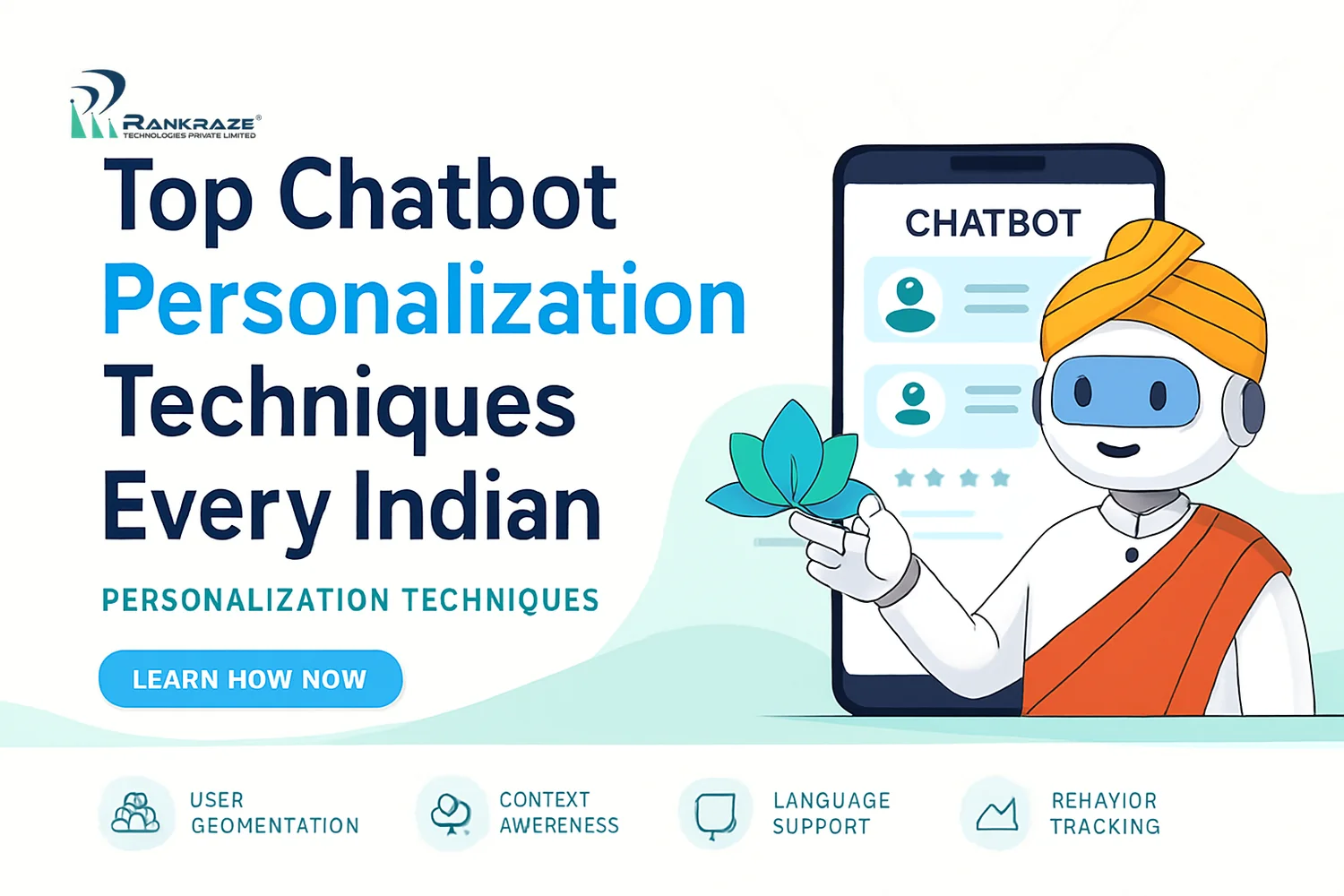
Top Chatbot Personalization Techniques Every Indian Business Should Know
Introduction to AI Chatbot Personalization in 2024
Let’s get straight to it—if you’re still using one-size-fits-all chatbot scripts in your Indian business, you’re missing out on stronger customer relationships and even revenue. AI chatbot personalization is now the expectation, not a nice-to-have. I’ve guided dozens of Indian brands through the trenches of digital upgrades, and trust me: your customers want every chat—on WhatsApp, your website, or voice bots—to feel personal, speak their language, and remember their last conversation.
The standard has shifted, thanks to leaps in Artificial Intelligence (AI) and Natural Language Processing (NLP), and by businesses like Swiggy, HDFC Bank, and Tata 1mg, who have set the bar high by delivering deeply personalized support. Indian customers today don’t tolerate irrelevant responses or bots that forget them. They expect a chatbot that knows their history and speaks their language—especially in cities like Chennai, Hyderabad, and Mumbai, where multilingual chatbot personalization is now critical.
In this guide, I’ll break down the chatbot personalization techniques that actually drive results: from collecting the right data and choosing AI models, to crafting bot personalities, rolling out omnichannel experiences, tracking the right metrics, and keeping user data safe. Everything here comes directly from recent wins and lessons learned by Indian businesses who take AI seriously and are scaling both customer satisfaction and efficiency.
Data Foundations: Collecting and Managing Data for Personalization
The foundation of every strong AI chatbot personalization strategy is high-quality, comprehensive data. I’ve seen companies in Delhi and Bangalore struggle when their bots feed off incomplete or messy data—leading to awkward, generic responses that turn users away and kill conversions.
To personalize effectively, you need three core types of data:
Behavioral Data: Tracks what users do—like pages they visit, products they click, or previous chats—to anticipate needs.
Demographic Data: Includes age, city, region, language, and device. This lets you tailor messages to, say, a Hindi speaker in Mumbai or Tamil user in Chennai.
Transactional Data: Covers past purchases, support tickets, and payment history—essential for offering relevant upsells or proactive help.
Data collection isn’t about gathering everything and hoping it sticks. With laws like India’s Personal Data Protection Bill (PDPB) and the upcoming DPDP Act, you need explicit user consent and clear explanations. Always tell users exactly what you’re collecting and why, using straightforward language—no fine print or legalese.
After getting consent, focus on data quality. Here’s my process:
Data Cleaning: Weed out duplicates and stale info. Automate regular checks with tools like Talend.
Data Integration: Bring together all customer touchpoints—your website, app, CRM (like Zoho CRM), WhatsApp—into a unified system. Schedule overnight syncs so you never lose track of user journeys.
Data Management: Audit who can access data and how it flows. Limit access to sensitive info. For most Indian SMEs, a cloud-based CRM is safer and easier than building infrastructure from scratch.
The real impact shows when you link your CRM to your chatbot. For example, connect Zoho CRM via API to your chatbot platform. When a user returns after months, your bot can greet them by name and reference their last purchase—no more awkward “new customer” greetings.
AI Technologies Powering Personalization: NLP, Machine Learning, and Beyond
What unlocks true chatbot personalization isn’t just having data; it’s how you use AI to understand and respond to users. The backbone is NLP in chatbot personalization. Natural Language Processing lets your bot decode user intent, pick up on their mood, and keep track of context—so a customer in Hyderabad gets a helpful, local-feeling answer, not a generic copy-paste.
NLP models like BERT or GPT, often running behind modern platforms, are trained to understand natural language patterns. If someone types, “Check my last booking status,” the NLP engine identifies key details (“booking”, “status”, “last”) and matches them to the user’s account.
But personalization has to go deeper. Machine learning (ML) models improve with every user interaction. Say a Mumbai user always checks their mobile bill in Marathi—the bot should eventually switch to Marathi by default. Predictive analytics (using ML) lets your bot suggest next steps—like, “Would you like to check your broadband plan too?”
Platforms such as Google Dialogflow and Rasa let you create and train these models on Indian English and local languages, and constantly fine-tune responses using live data. Set up A/B tests: if a certain greeting gets better engagement in Delhi, send more users that way, and retrain your bot every week.
Crucially, AI is not set-and-forget. Your chatbot should keep learning from real interactions. Invest in platforms where you can easily update training data, retrain the AI, and track how well it recognizes intent. That’s how you keep pace with rising customer expectations.
Designing Conversational Flows that Balance Human Touch and Automation
To build user trust and drive usage, conversational design is as important as AI itself. The main idea: blend natural, empathetic, context-aware interactions with efficient automation.
For Indian audiences, this comes down to understanding language diversity and cultural nuances. In Bangalore, a bot needs to handle formal English and Kannada, adjusting tone as users prefer. Steer clear of slang or inside jokes that may not translate. And always include a clear “speak to a human” option for sensitive topics—customers value this, especially in banking or healthcare.
Start by mapping out the main user journeys—where do people get stuck or frustrated, like failed payments or order tracking? Script the main flows, but build in flexible NLP so users can type naturally. Add personal touches—address users by first name, use respectful greetings like “Namaste, how can I help today?”—and guide users clearly with prompts (“Choose your query: Billing | Support | Feedback”).
Don’t treat this as a one-time job. After each chat, ask users, “Was this answer helpful?” Gather this feedback and use it to refine flows every month. Over time, you’ll see which conversations drive satisfaction, and which need a redesign.
Building and Implementing Chatbot Personalities and Personas
Here’s a fact: people interact more with chatbots that feel human, not robotic. Defining a consistent, brand-aligned bot personality makes a big difference. For example, a finance startup in Mumbai might want a bot that’s friendly but professional, while a Chennai online store goes for an upbeat, informal assistant fluent in Tamil.
Customizing dialogue for your persona isn’t just about greetings. It’s about matching tone, humor, and response style to both your business and your user’s needs. Build a persona guide: list key traits, catchphrases, fallback lines, and when to escalate to a human.
For implementation, pick platforms that support persona development. Google Dialogflow and Rasa let you set up persona-driven responses by intent and situation. Smaller firms can use Chatfuel or Botpress templates and tweak for Indian users.
This pays off. Telecom brands in Delhi who rolled out a relatable, multilingual bot persona saw repeat usage jump by 15–20% (see Gartner AI Insights).
Platform | Persona Customization Level | Best For |
|---|---|---|
Dialogflow | High (contextual responses, tone variation) | Enterprise, multilingual use cases |
Rasa | High (open source, customizable NLU) | Developers, advanced custom flows |
Chatfuel | Medium (prebuilt persona templates) | SMEs, quick deployment |
Botpress | Medium (modular persona plugins) | Startups, iterative prototyping |
Cross-Channel Personalization Strategies for Seamless User Experience
Consistency can make or break trust. If your chatbot gives different answers on web, WhatsApp, or Facebook Messenger, users will quickly tune out. Cross-channel chatbot personalization ensures each interaction feels coordinated, regardless of platform or device.
You need to synchronize user data and conversational context. Use APIs to link your CRM, website, app, and social platforms. For example, if a customer starts a service query on your app in Hyderabad and follows up via WhatsApp, the bot should pick up the thread, not start over. Persistent user IDs help you track users across channels, keeping their journey connected.
Digital behavior in India is fragmented. Urban users might hop from Instagram DMs to your site, while others in rural areas stick to WhatsApp or SMS. The challenge is integrating every touchpoint with real-time context sharing. Platforms like Yellow.ai and Freshchat specialize in omnichannel deployment for Indian brands. They let you set up channel-specific flows but keep a single customer profile at the center.
Take the example of a top e-commerce player in Bangalore. By connecting chatbot flows on their website, app, and WhatsApp, customers start with a query online and finish their purchase on WhatsApp—with the bot referencing previous browsing. They reported a 22% jump in conversions during their annual tech summit.
Measuring Success: Key Metrics, Analytics, and ROI Demonstration
If you don’t measure, you’re flying blind. For AI chatbot personalization, skip surface metrics like total chats or average response time. Focus on chatbot performance metrics that link to real business goals.
For my clients in Mumbai and Delhi, I track:
Engagement Rate: How many users actually engage with the bot? High engagement shows conversations are relevant and tailored.
Sentiment Analysis: Use NLP tools like Google Cloud Natural Language API to classify user messages as positive, neutral, or negative. If positivity rises, your personalization is clicking.
Customer Satisfaction Scores (CSAT): After each chat, prompt users for a quick rating. Break down scores by segment and channel to spot trends.
Resolution Rate: What percentage of queries does the bot solve without human help? Higher is better, but watch for users who drop off out of frustration—don’t count these as wins.
Set KPIs up front. For example: “Boost repeat purchases by 15% in three months with personalized recommendations.” Monitor your numbers weekly using dashboards in Google Analytics, Hotjar, or your chatbot’s own reporting tools.
To prove ROI, compare performance before and after implementing personalization. One fintech client in Chennai cut call center costs by 30% after launching a multilingual, persona-based bot—clear evidence that personalization pays off fast.
Ethical Guidelines and Privacy Considerations in AI Chatbots
Let’s be clear: you can’t afford to treat privacy and ethics as afterthoughts. India’s regulatory framework is tightening, and users are more aware of their rights. Ethical AI chatbots require getting this right from day one.
Start by getting informed consent—plain language like, “We use your chat data to improve your experience. Opt out anytime,” works best. Store data securely, encrypt both in transit and at rest, and only keep what’s needed. Have a regular schedule for deleting old data.
Ethical AI also means:
Transparency: Make it clear when users are chatting with a bot, not a human.
Fairness: Avoid bias—train models with diverse Indian datasets so you don’t alienate any group.
User Consent: Let users view, change, or delete their data without hassle.
For anonymizing sensitive data, use tokenization—swap names and addresses for unique codes before analyzing. Platforms like AWS Comprehend offer built-in tools for detecting and redacting personally identifiable information (PII). Regularly review chatbot logs for any compliance slips.
Get this wrong and you erode user trust at best—and face regulatory fines at worst. Respect privacy, be transparent, and users will reward you.
Industry Use Cases and Benefits of Personalized AI Chatbots
Across India, personalized AI chatbots are delivering concrete results. Here are four sectors where AI chatbot benefits stand out:
E-commerce
A Mumbai-based fashion retailer uses a multilingual chatbot that greets customers in their language, remembers past purchases, and suggests products based on browsing. The impact? An 18% increase in average order value and 25% fewer abandoned carts.
Banking
HDFC Bank’s chatbot taps into transactional and demographic data to suggest credit upgrades and handle KYC issues. By personalizing for urban and rural users, the bank brought down call center volumes by 40% and boosted customer satisfaction.
Healthcare
In Chennai, a hospital system implemented a bot that recognizes returning patients, schedules follow-ups, and shares customized health tips. With NLP-driven triage, first-contact resolution rates improved by 32%.
Telecom
A major telecom brand in Bangalore built a persona-driven chatbot that explains plans and resolves issues in English, Hindi, and Kannada. With support across app and WhatsApp, customer churn dropped by 15% in half a year.
Industry | Personalization Technique | Outcome |
|---|---|---|
E-commerce | Behavioral recommendations, multilingual flows | +18% average order value |
Banking | Transactional history-driven offers, regional adaptation | -40% call center load |
Healthcare | Patient history integration, symptom triage | +32% first-contact resolution |
Telecom | Persona-driven, cross-channel support | -15% customer churn |
The takeaway: don’t just copy what’s trending. Study your own customer journeys, identify the most relevant chatbot personalization techniques, implement thoughtfully, and keep measuring and refining.
Roadmap and Quick Wins: Practical Steps to Enhance Your Chatbot
Ready to build a smarter, more personal chatbot? Here’s the roadmap I recommend for Indian businesses wanting to implement or upgrade AI chatbot personalization:
Audit Your Current Chatbot: List every platform (web, WhatsApp, app). Review chat logs for repetitive scripts or points where users drop off.
Map Data Sources: Find where you’re storing customer data (CRM, website, offline files). Spot the gaps—are you missing out on language data or repeat purchase history?
Define Personalization Goals: Pick one or two easy wins—like personalized greetings, language switching, or product suggestions for returning visitors.
Choose Your Tools: For basics, try Chatfuel or Botpress. For advanced NLP, use Google Dialogflow or Rasa. Always check for Indian language compatibility.
Implement and Test: Launch new features to a small group. Use A/B testing to compare engagement and satisfaction before rolling out further.
Monitor Metrics: Watch engagement, CSAT, and resolution rates weekly. Use Google Analytics or your chatbot’s dashboard for real-time insights.
Iterate and Scale: Collect user feedback, tweak your flows, then expand personalization to more channels and user segments.
Even small steps—like greeting users by name or instantly switching to their preferred language—can deliver measurable improvements in Net Promoter Score (NPS). Don’t wait for perfection; launch, measure, and build from your first success.
Future Outlook: Emerging Trends and Innovations in Chatbot Personalization
Innovation in AI chatbot personalization is moving fast. Here’s what Indian businesses should watch for after 2024:
Multilingual chatbot capabilities are improving rapidly. With better NLP, bots can now support dozens of Indian languages and dialects, even switching between English and regional languages mid-chat. This will be essential for serving users in tier-2 cities and rural regions.
AI chatbots are also starting to integrate with new tech—like AR (augmented reality), VR (virtual reality), and voice assistants. Picture a shopper in Bangalore getting live AR product demos and help in Kannada—this is almost here.
Accessibility is improving too. New frameworks are focusing on compatibility with screen readers, voice input, and low-bandwidth connections—making bots usable by those with disabilities or in areas with slow internet.
Lastly, real-time emotional intelligence is maturing. AI can now detect user frustration or anger and adjust its tone or response speed. Soon, bots will offer genuine empathy, not just scripted replies, when users are upset.
Stay flexible. What feels advanced today—like sentiment-aware, fully multilingual bots—will be standard practice in just a couple of years.
What is AI chatbot personalization and why is it important?
It’s about tailoring chatbot responses, tone, and services to each user based on their data and context. This matters because it increases engagement, boosts sales, and builds lasting loyalty—far beyond what generic bots can deliver.
How can businesses collect and manage data for chatbot personalization?
Start with collecting behavioral, demographic, and transactional data with clear user consent. Integrate all your touchpoints (CRM, website, app), clean data regularly, and make privacy checks routine. Remember, high-quality data is more valuable than large volumes of messy data.
What AI technologies enable effective chatbot personalization?
NLP helps the bot understand user input, while machine learning lets it adapt based on history. Predictive analytics anticipate user needs. Platforms like Dialogflow and Rasa are the go-to tools for advanced AI.
How do you design chatbot conversations that feel human yet efficient?
Use empathetic language, keep the structure clear, and provide fallback options. Personalize greetings, recognize when users return, and always offer a route to talk to a human for complex situations.
What are the best practices for cross-channel chatbot personalization?
Sync user data and keep conversation history across all your digital channels (web, app, WhatsApp, social). Use persistent IDs and APIs to keep the experience seamless.
How can chatbot performance and ROI be measured beyond basic metrics?
Track engagement, user sentiment, CSAT, resolution rate, and the impact on conversions or revenue. Compare before and after you introduce personalization for clear proof of value.
What ethical and privacy considerations should be addressed in AI chatbots?
Always get explicit user consent, anonymize sensitive info, clearly tell users they’re talking to a bot, and explain what happens with their data. Audit regularly to avoid bias or privacy risks.
How can chatbot personalization be adapted for multilingual and multicultural audiences?
Train your bot with diverse Indian language datasets, let users pick their language anytime, and tweak content for local preferences. Test real conversations with users from different cities for cultural accuracy.
Conclusion: Empowering Indian Businesses with Advanced Chatbot Personalization
Personalized AI chatbots are now essential for Indian businesses competing in a digital, multilingual, and crowded market. With smart data management, NLP-powered conversations, unique bot personas, and cross-channel support, these techniques deliver real gains in customer satisfaction, sales, and efficiency.
But success isn’t just about tech. It’s about combining automation with empathy, staying innovative but ethical, and always putting user security first. Brands in Mumbai, Chennai, and Bangalore who prioritize chatbot personalization as a core strategy—not just a side project—are the ones winning loyalty and results.
If you’re ready to leave generic bots behind and build real customer relationships, now is the perfect time. As a strategist at Rankraze, I’ve seen firsthand how tailored AI solutions make a visible impact. Reach out if you want hands-on help bringing your chatbot personalization vision to life—because in this space, personalized always outperforms generic.
Related Articles
Questions we getasked the most
Clear answers to help you understand this topic and make confident, informed decisions.
AI chatbot personalization involves tailoring chatbot interactions to individual users based on their behavior, demographics, and transaction history. For Indian businesses, it is crucial because customers expect chatbots to remember their preferences, communicate in their preferred language, and provide relevant, timely assistance. Personalization enhances customer engagement, satisfaction, and operational efficiency, helping brands like Swiggy and HDFC Bank set higher customer service standards.
Businesses should collect high-quality behavioral, demographic, and transactional data with explicit user consent, clearly explaining what data is collected and why. Compliance with Indian regulations such as the Personal Data Protection Bill (PDPB) and the upcoming DPDP Act requires transparency and user control over data. Proper data management includes organizing, securing, and updating data to avoid generic or irrelevant chatbot responses that can harm user experience and conversions.
Key AI technologies include Natural Language Processing (NLP) to understand and generate human-like responses, Machine Learning to analyze user data and predict needs, and multilingual support systems to cater to diverse Indian languages. These technologies enable chatbots to deliver personalized, context-aware conversations that respect cultural nuances and user preferences across platforms like WhatsApp, websites, and voice bots.
Effective chatbot conversational design involves creating chatbot personas that reflect the brand’s voice and resonate with the target audience. Conversations should be natural, context-aware, and adaptive, using NLP to understand intent and sentiment. Incorporating fallbacks for complex queries, maintaining brevity, and enabling seamless handoffs to human agents when necessary ensure efficiency without sacrificing a human touch.
Beyond tracking basic metrics like response time and resolution rate, businesses should measure customer satisfaction scores, engagement depth, conversion rates influenced by chatbot interactions, and retention improvements. ROI metrics may include cost savings from automation, revenue uplift from personalized upselling, and reductions in support ticket volumes. Continuous analysis helps optimize chatbot strategies tailored to Indian customers’ unique behaviors and preferences.
Still have questions? Let's talk.
Get a free consultation and a personalised strategy — no obligation.
.png&w=828&q=75)