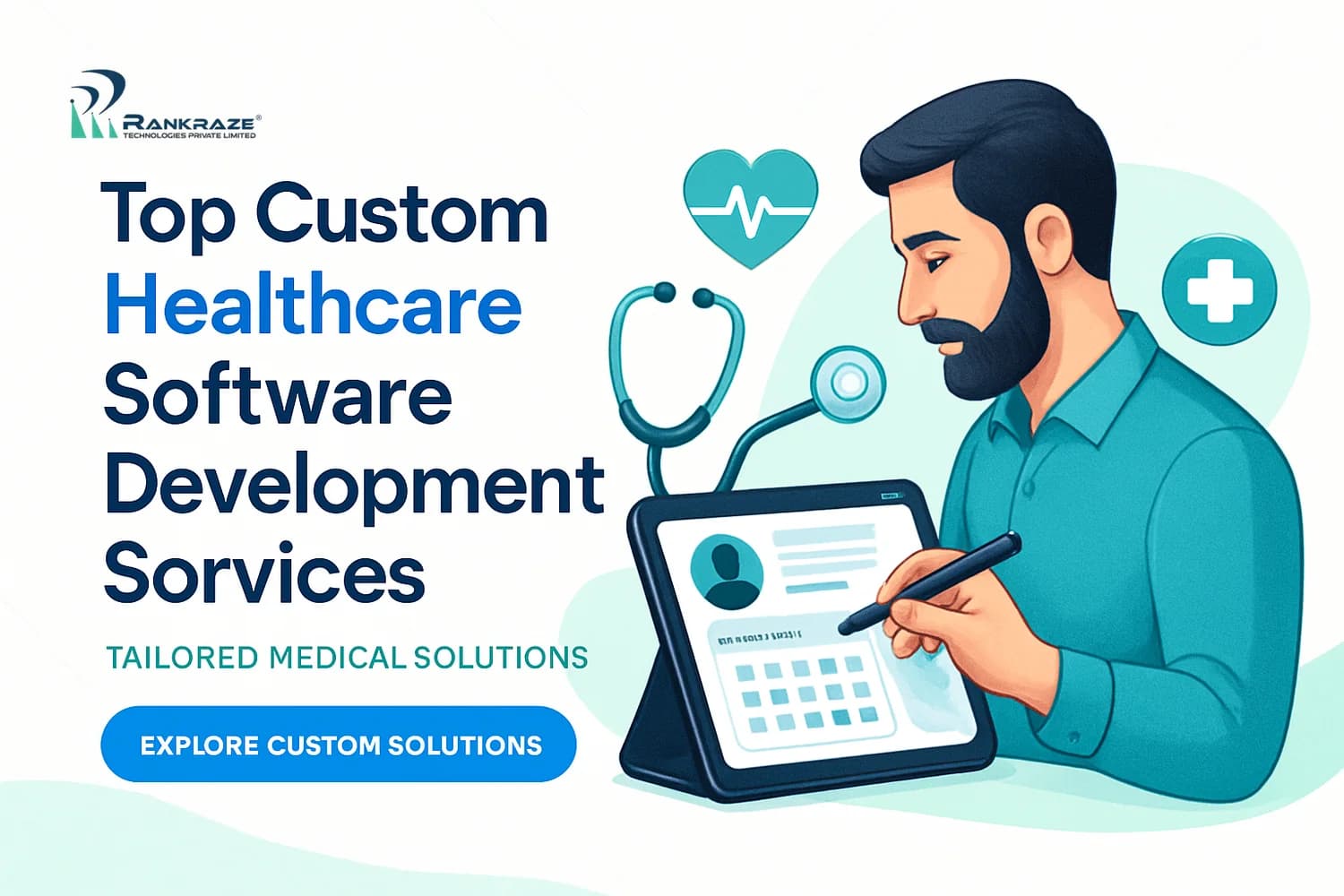
Top Custom Healthcare Software Development Services in India: Tailored Solutions for Your Medical Practice
Introduction to Custom Healthcare Software Development
Running a healthcare practice in India is complex. Off-the-shelf SaaS tools often do not meet your needs. Each provider faces unique workflow issues, privacy rules, and compliance needs.
SaaS platforms may look easy to start with. But they rarely match the real needs of Indian clinics and hospitals. Custom software considers your region’s rules, local languages, and old systems.
Here is a quick comparison of custom healthcare software and SaaS options:
Feature | Custom Healthcare Software | SaaS Alternatives |
|---|---|---|
Workflow Fit | Built for your needs, no shortcuts | Generic; often needs workarounds |
Compliance | Supports NABH and local rules | May skip India/NABH details |
Integrations | Connects with old and new systems | Usually limited or extra charge |
Scalability | Grows with your practice | Limited by vendor’s plans |
Support | Dedicated, India-based experts | Standard response, often slower |
This guide explains what to expect from top healthcare software development services. You will learn about compliance, integration, and support. By the end, you will know how to choose the right partner.
Why Outsource Healthcare Software Development to India?
Outsourcing to India is not just about saving money. You also get skilled developers who know healthcare rules and workflows.
Teams in Mumbai and Hyderabad understand Indian regulations. They build secure, multilingual systems and support programs like Ayushman Bharat Digital Mission.
Many worry that outsourcing means lower quality or security. But top Indian IT companies meet ISO 13485, ISO 27001, and HIPAA standards. You get global quality without high costs.
Save 40-60% compared to Western developers.
Work with healthcare specialists, including HL7, FHIR, and DICOM experts.
Faster build times with proven processes.
Easy to scale as you grow.
Still unsure? Check reviews and case studies on Clutch to see real results from Indian teams.
Types of Healthcare Software Solutions We Develop
We do not push pre-built systems. Every project starts by mapping your workflows, compliance needs, and integrations.
Here are some solutions we have built for hospitals, labs, and clinics:
Electronic Health Records (EHR) & Revenue Cycle Management (RCM): We design EHRs that fit your daily work. Our platforms are NABH-ready, support Indian languages, and sync billing. Custom RCM automates tasks from registration to claims, reducing mistakes.
Clinical Decision Support and AI Diagnostics: AI modules help doctors flag lab results and offer suggestions. This is helpful for busy specialists.
Telemedicine Platforms and Patient Portals: We build HIPAA-compliant telehealth systems for both rural and urban clinics. Features include video consults, e-prescriptions, and mobile scheduling.
Healthcare Analytics and Reporting: Our dashboards help admins track appointments, claims, and generate reports for audits.
Custom Integrations: We link your new system with EHRs, labs, pharmacy, and insurance tools. This keeps your data flowing smoothly.
Every project starts with a deep discovery phase. If you are unsure what you need, we can show you recent examples from across India.
Technologies and Standards We Use: HL7, FHIR, DICOM, and AI
Interoperability and standards are essential. Every project uses HL7, FHIR, DICOM, and AI modules.
Here’s how each standard helps:
HL7 (Health Level 7): HL7 connects hospital systems. For example, lab results can go straight to your EHR without manual entry.
FHIR (Fast Healthcare Interoperability Resources): FHIR uses APIs for real-time data exchange. It keeps records secure and accessible, especially in mobile apps.
DICOM (Digital Imaging and Communications in Medicine): DICOM handles medical imaging. It lets clinics access CT scans or MRIs inside the EHR.
AI and Machine Learning: AI modules detect problems, score patient risk, and help triage appointments. This saves time for clinicians.
We use these standards so your system is ready for future needs, like telemedicine or new government platforms.
Our Approach to Compliance and Data Security
Compliance is not just paperwork. It protects you from penalties and builds patient trust. Security and compliance are central to every project.
Before coding, we map all relevant rules—HIPAA, GDPR, and Indian laws like the IT Act and DISHA. Compliance is built in from the start.
Data Encryption: All patient data is encrypted in transit and at rest. If there is a breach, the data stays safe.
Access Controls: Only the right staff see the right data. For example, a receptionist can see appointments, but not clinical notes.
Regular Audits: We run audits every quarter to catch security gaps early.
Continuous Staff Training: We train your team on data handling and security. Everyone learns how to keep patient data safe.
You can review our audit logs and certificates any time. We believe in full transparency.
Healthcare Software Development Process and Timelines
A clear process is key to project success. We involve clients at every step, so there are no surprises.
Here’s how we manage each project:
Requirement Gathering & Discovery: We start with workshops to map your processes and needs.
Prototyping & User Stories: We create clickable prototypes. You test these before development starts.
Development (Agile Sprints): We build in 2–3 week sprints, with updates and demos after each one.
Testing & Compliance Checks: We test at every stage and check compliance, so there are no surprises at launch.
Deployment & Support: Rollouts start with a pilot group. Once it passes, we expand to the full practice.
A mid-sized EHR or telemedicine solution takes 12–24 weeks, depending on complexity. You get feedback at every phase.
Cost Structure and Investment Overview
We believe in clear pricing. You will know where every rupee goes and why.
Key factors that affect cost:
Scope and Complexity: More modules and advanced features increase costs. A simple booking system costs less than a full clinical platform.
Compliance and Security: Meeting HIPAA or GDPR adds hours, but is essential for sensitive data.
Integrations: Connecting with labs or insurers adds upfront cost, but saves time later.
Ongoing Support: Updates, security, and training are part of your total cost.
For example, a custom EHR for a multi-site clinic in Bangalore usually costs ₹18–40 lakhs. Telemedicine modules often start at ₹8 lakhs. Over five years, custom builds often save 30–60% compared to SaaS, while giving you more control.
To measure ROI, track time saved, fewer claim rejections, and patient satisfaction. We help you show these gains to your board or investors.
Integration with Existing Healthcare Systems
Integration is often the hardest part. Many clinics struggle because their systems do not share data.
Our approach to integration is hands-on and proven:
System Audit: We map every system—EHR, RCM, lab, pharmacy, payroll—to find all integration points.
Standards-Based Interfaces: HL7 and FHIR let us build real-time data bridges.
Custom APIs: Where standards do not reach, we build secure custom APIs.
Data Migration: We transfer and check old data, running old and new systems in parallel for a short time.
User Testing: Real staff test every integration before launch.
Our goal is zero downtime and zero data loss. Ask for references from Mumbai and Chennai to see our track record.
Legacy System Modernization and Migration
Old systems slow down your work and risk compliance. Upgrading frees your data and improves patient care.
Legacy systems often use old formats and lack modern security. Replacing everything at once is risky. Here’s our step-by-step plan:
Incremental Migration: We move modules one at a time, running old and new together so staff can adjust.
Data Transformation: We convert and clean old data, even digitizing paper records.
Compliance Upgrade: Every upgrade adds the latest compliance features.
UX Redesign: We build new interfaces for real users, making tasks easier.
For example, we helped a Delhi hospital move from FoxPro to a modern web EHR with HL7/FHIR. We preserved 15 years of records and enabled real-time links with labs.
Success Stories and Client Testimonials
Real results matter most. Here are some examples:
Chennai Cardiology Clinic: Our EHR and RCM cut claim rejections by 38% in one year.
Hyderabad Diagnostics Chain: AI flagged 12% more abnormal lab results. Doctors could act sooner.
Bangalore Telehealth Startup: Our telemedicine platform scaled to 10,000+ consults per month with 99.98% uptime.
Clients praise our compliance, quick fixes, and support. If you want a reference, just ask.
Post-Launch Support, Maintenance, and User Training
Healthcare software needs regular care. Regulations change, and user needs shift. We treat maintenance and support as core services.
Here’s how we keep your software strong:
Proactive Monitoring: We use Datadog to watch system health in real time.
Regular Updates: Quarterly updates bring security patches and new features.
24/7 Support: Our India-based team resolves most tickets within 4 hours.
User Training: We train each user group, on-site or remote.
Feedback Loops: We collect feedback and fine-tune the system to your needs.
This keeps your software compliant, strong, and easy to use as your practice grows.
Starting Your Healthcare Software Project: Step-by-Step Guide
Ready to start? Here is our process for new clients:
Initial Consultation: We start with a free call to discuss your goals and needs.
Requirement Analysis: We interview stakeholders and map workflows to create a clear plan.
Project Planning: We draft a project plan with clear scope and milestones.
Development: We build your software in agile sprints, with frequent demos.
Testing & Validation: Your users test the system to catch issues early.
Deployment & Go-Live: We roll out in phases with full training and support.
You are never left guessing. Every decision is clear, and your feedback shapes the final product.
Future Trends in Healthcare Software Development
Healthcare IT is changing fast in India. Here are some trends to watch:
AI and Machine Learning: AI is helping with risk scoring and triage, saving time for clinicians.
Cloud Adoption and Scalability: More practices are moving to cloud platforms for easy scaling and disaster recovery.
Advancing Interoperability: HL7 and FHIR are becoming standard, breaking down data silos.
Patient-Centric Solutions: Patient portals, mobile apps, and chatbots give patients more control and reduce admin work.
We design every solution to be ready for these trends. Your system will be upgradable and standards-compliant.
Frequently Asked Questions
Clients in India often ask these questions. Here are clear answers:
What are the benefits of custom healthcare software over SaaS alternatives?
Custom software fits your practice’s needs and workflows. SaaS makes you adapt to the software. With custom, you control features, data, and upgrades.
How do interoperability standards like HL7 and FHIR work in healthcare software?
HL7 and FHIR let different health systems share data in a standard way. For example, HL7 lets a lab send results directly to your EHR. FHIR lets patients access their records from a mobile app.
What is the typical process and timeline for developing custom healthcare software?
Our process covers requirements, prototyping, agile builds, testing, and phased rollout. For EHR or telemedicine, expect 3–6 months depending on complexity.
How do you ensure data security and regulatory compliance in healthcare software?
We use strong encryption, strict access control, and regular audits. HIPAA, GDPR, and Indian IT rules are built into our system and checked at each step.
What challenges are unique to healthcare software development and how are they addressed?
Healthcare software deals with sensitive data, tough integrations, and strict rules. We solve this with strong security, HL7/FHIR standards, and deep domain experience. Our agile process keeps you involved.
What post-launch support and maintenance services do you offer?
We provide ongoing monitoring, updates, quick fixes, and user training. Maintenance is a core part of our service.
How do you handle integration with existing healthcare systems and legacy modernization?
We start with a system audit, use HL7/FHIR and custom APIs, and run old and new systems in parallel during migration. Our focus is zero data loss and minimal disruption.
What strategies improve user adoption and training for healthcare software solutions?
We involve users early, deliver role-specific training, and collect feedback to adjust the solution.
Partner with Rankraze for Customized Healthcare Software Solutions in India
At Rankraze, we build digital tools for better care. Our team has helped clinics, hospitals, and labs across India become compliant and scalable. We are here for ongoing support as your needs change.
If you want to modernize your healthcare operations, let’s talk. We help you with compliance, integrations, and tech choices, so you can focus on patient care.
Contact us for a consultation or a clear project quote. Let’s build the future of healthcare together.
Contact Us for a Custom Healthcare Software Consultation
Ready to get started? Here’s how to reach our healthcare software team at Rankraze:
Call us for a free consultation and needs assessment.
Email your requirements for a tailored quote or to set up a live demo.
Visit our Chennai office for an in-person chat about compliance, integrations, and planning.
We support healthcare providers across India, from Mumbai and Delhi to Bangalore and Hyderabad.
Let’s create the next benchmark in Indian healthcare—one tailored solution at a time.
Frequently Asked Questions
What are the benefits of custom healthcare software over SaaS alternatives?
Custom healthcare software is made for your practice's workflows, compliance needs, and integration with old systems. Unlike SaaS, it offers better scalability and dedicated support. You avoid the limits and workarounds of off-the-shelf solutions.
How do interoperability standards like HL7 and FHIR work in healthcare software?
HL7 and FHIR are global standards that help different healthcare systems share data. Custom software uses these standards for smooth data exchange between EHR, decision support, and other IT tools. This improves data consistency and patient care.
What is the typical process and timeline for developing custom healthcare software?
The process starts with requirements and compliance checks, then design, development, testing, and launch. Timelines depend on complexity, but usually range from a few months to over a year. We focus on meeting regulations, integrating with your systems, and ensuring scalability.
How do you ensure data security and regulatory compliance in healthcare software?
We use strict access controls, encryption, and audit trails. We follow NABH, HIPAA, and GDPR rules where needed. Our team stays updated with compliance needs and builds them into the software. Regular audits and maintenance keep systems secure.
What post-launch support and maintenance services do you offer?
We provide ongoing maintenance, updates for new rules, performance monitoring, bug fixes, and user support. Our India-based team gives prompt help so your software stays reliable and secure as you grow.
.png&w=828&q=75)