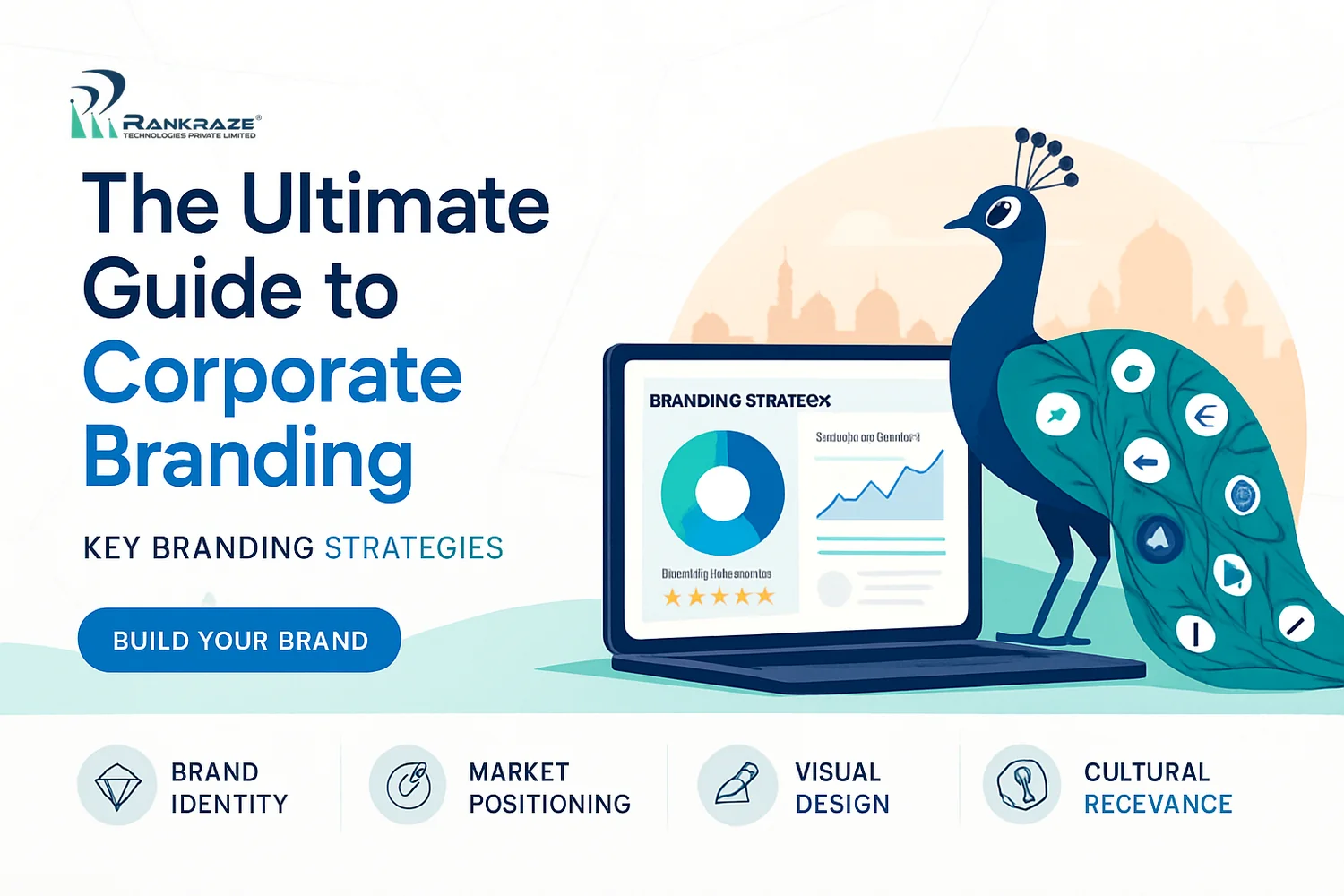
The Ultimate Guide to Corporate Branding Strategies for Businesses in India
If you run a business in India, corporate branding is far more than designing a clever logo or buying ad slots. It’s about shaping how every stakeholder—your customers, partners, investors, and employees—perceives you at every touchpoint. In this guide, I’ll break down actionable strategies and hands-on frameworks that I use with Indian businesses to build brands that fuel real growth and loyalty, not just surface-level recognition. You’ll get a playbook that covers the roots of branding, digital and social tactics, the global/local balancing act, ROI tracking, internal engagement, sustainability, and the exact tools I recommend to measure and refine your brand.
Introduction to Corporate Branding in India
Let’s start by clarifying what corporate branding truly means for Indian business owners. When I refer to corporate branding, I’m talking about the intentional process of shaping perceptions about your company as a whole—not just your products—through consistent identity, messaging, and customer experience. This is about the bigger picture: your company’s vision, values, culture, and the trust you build.
Why is this even more critical in India? Our market is famously diverse: multiple languages, traditions, and hyper-competitive sectors. A strong corporate brand isn’t just a “nice to have”—it’s your credibility shield, a magnet for top talent, and a lever for charging a premium or winning customer loyalty. This guide is designed to ground you in practices that work globally, but are proven to succeed in the Indian context.
I’ll walk you through what actually works—and what to avoid—in today’s climate. We’ll look at shifting consumer trust, the rise of digital-first metros like Mumbai, and how to build a brand that stands out and scales across India.
The Evolution of Corporate Branding: Past to Present
Corporate branding didn’t start with Instagram pages or viral stunts. The evolution—from ancient trade symbols on pottery to Tata’s enduring trust—proves branding is built on deep, lasting foundations. Understanding this history keeps your brand from becoming just another shallow identity exercise.
In the past, Indian brands like Amul and Godrej used traditional advertising, word-of-mouth, and packaging to build trust. Globally, milestones like the rise of iconic logos (think IBM’s blue stripes) and the shift to experience-based brands were key. Over the last two decades, branding has shifted to delivering consistent, multi-channel experiences—branding isn’t just about a logo anymore.
With globalization and digital transformation, things have changed fast. Today, a brand from Bangalore can land a customer in Singapore overnight. But with wider reach comes new complexity: your brand must resonate with both local customers in Chennai and global audiences that expect integrity, sustainability, and innovation.
Digital and Social Media Strategies in Corporate Branding
Here’s the crux: digital and social channels are now the main arena for corporate branding in India. Ignore them, and your brand risks fading into irrelevance. But simply posting on Facebook or LinkedIn isn’t a strategy. Here’s how I approach digital branding for Indian corporates and what actually produces brand equity.
Your website is your digital headquarters. It must load quickly, work perfectly on mobile, and instantly reflect your brand promise—not just your product catalogue. Open Google Analytics, check your bounce rate (percentage of visitors who leave after one page). If it’s higher than 60%, your site isn’t making the right impact—fix your messaging or experience before spending on traffic.
Social media is about engagement rate—how users interact with your posts through likes, comments, shares, or clicks—not just about racking up followers. In India, LinkedIn, Instagram, and WhatsApp each play distinct roles. For B2B, LinkedIn company pages and thought leadership posts establish authority. For B2C, Instagram Reels and Stories humanize brands. Consistency in tone, visuals, and messaging across these channels is what drives brand recall.
Case Studies: Indian Corporate Digital Branding in Action
Look at Zomato’s quirky social media approach. Their mix of humor and real-time updates makes their voice unmistakable. Tata Consultancy Services leverages LinkedIn to showcase leadership and innovation stories, positioning them as industry thought leaders. These results come from focused content strategy and audience research, not luck.
Optimizing with Tools and Metrics
To understand whether your digital branding actually works, I monitor:
- Open Google Analytics. Check where your visitors are coming from (Acquisition), how long they stay (Session Duration), and which channels convert best. A high volume of direct traffic and long session times show your brand is strong and memorable.
- In Meta Business Suite, monitor engagement rates and audience demographics for branded posts. Run A/B tests: create two ad versions, one generic and one telling your brand story. Watch for which creative gets lower cost per engagement; scale that version.
- For search, use Google Search Console to track branded keyword clicks versus non-branded. If branded searches are trending up, your brand recall is improving.
My advice: invest in content formats and channels showing high branded engagement and search. Pause or adapt what’s not hitting the mark. Branding is a continuous test-refine-repeat cycle.
Global vs. Local Corporate Branding: Challenges and Solutions
Indian businesses aiming for a global presence face a tough question: how do you keep a unified brand while adapting to diverse local cultures? I’ve rarely seen cookie-cutter branding work in India—even Delhi and Hyderabad consumers have unique expectations.
Global branding is about consistency—same values, visuals, and messaging everywhere. Local branding is about adapting language, imagery, and campaigns for regional audiences. The art is striking the right balance.
Balancing Act: Strategies that Work
My solution: start with your core values—what’s non-negotiable, like trust or innovation. Then allow tactical flexibility in campaigns. Unilever’s “Sunsilk” gets this right, shifting messaging to highlight hair strength in the north and hair shine in the south, but sticking to the same brand promise everywhere.
Tata Motors shows how a global brand platform (safety, technology) can be brought to life locally by focusing on Indian road needs and family priorities in cities like Chennai and Pune.
Structured Comparison: Global vs. Local Branding Approaches
| Aspect | Global Branding | Local Branding |
|---|---|---|
| Core Message | Uniform worldwide | Adapted to region |
| Visual Identity | Strict consistency | Localized elements |
| Campaigns | Centralized planning | Decentralized execution |
| Customer Perception | Reliable, established | Relevant, relatable |
I recommend defining your brand’s “non-negotiables,” then giving local teams room to adapt campaigns—so you stay consistent but not rigid.
Emerging Trends and Technologies Shaping Corporate Branding
Staying ahead in corporate branding means spotting the trends already influencing how Indian companies connect with audiences. Let’s get straight to what’s shaping the next wave.
Artificial Intelligence (AI) is powering personalized experiences. For example, deploying AI chatbots on your website or WhatsApp Business account delivers fast, on-brand responses—boosting perception and loyalty, especially with urban consumers.
Augmented Reality (AR) and Virtual Reality (VR) are moving mainstream. Lenskart lets customers try on glasses virtually, which increases engagement and positions them as innovators. Data analytics is now essential to identify which campaigns actually build brand equity, not just clicks.
Influencer Marketing and Experiential Branding
Influencer marketing has matured. Instead of chasing big-name celebrities, leading brands now partner with micro-influencers who have real, loyal audiences in cities like Bangalore and Hyderabad. This approach is more authentic and delivers trust faster than generic ads.
Experiential branding—like immersive events or interactive retail spaces—deepens emotional connections. Asian Paints’ “Colour Store” in Mumbai turns shopping for paint into an experience, making the brand unforgettable.
How to Adopt These Trends
My advice: pilot one trend at a time and measure closely. Open Google Analytics, segment your traffic by campaign (influencer, AR, etc.). If influencer-driven visitors buy more, scale those collaborations. If AR keeps users engaged longer, expand it to more products.
Measuring ROI and Analytics in Corporate Branding
Here’s the reality: if you don’t measure branding, you can’t improve it. It’s tough to tie branding directly to revenue, but you can track both perception (qualitative) and hard numbers (quantitative).
Set clear Key Performance Indicators (KPIs). Start with brand awareness (how many recognize your name), engagement rate, Net Promoter Score (NPS: how likely customers are to recommend you), and share of voice (your presence in industry conversations).
Tools and Methods for Brand Assessment
- In Semrush, put your brand name in the Position Tracking tool. Watch how your branded keyword rankings and search visibility shift over time.
- Use SurveyMonkey to run regular brand perception surveys with your customers and employees. Track movement in trust, innovation, and social responsibility.
- In Google Analytics, set up goals for actions driven by brand campaigns—like signups from a branded landing page. Calculate cost per acquisition and see if branded campaigns outperform generic ones.
This approach shows you if your brand is just “visible” or actually driving loyalty and revenue. I suggest reviewing metrics quarterly and making tactical adjustments based on the data.
Internal Branding: Engaging Employees as Brand Ambassadors
Here’s a hard-won lesson: if your employees don’t believe in your brand, your customers won’t either. Internal branding and genuine employee engagement are foundational—especially in India, where word-of-mouth and personal trust weigh heavily.
Internal branding means getting your people to live and breathe your corporate values—not just reciting them. Skip the posters and slogans in your Hyderabad office; focus on real engagement through training, recognition, and consistent leadership communication.
Proven Techniques for Employee Engagement
Start with onboarding. Make sure every new hire understands your brand’s story and values from Day 1. Run internal campaigns such as “Brand Champion” awards or host storytelling sessions where employees share customer wins that reflect your brand.
Keep communication transparent. Use platforms like Slack or Microsoft Teams for regular updates, but don’t skip in-person or virtual town halls led by leadership. In my experience, companies that publicly celebrate employee achievements see higher loyalty and lower attrition rates.
Real-World Example
Infosys nails this with its “Infy Culture” program—integrating brand values into everything from onboarding to leadership tracks, turning employees into true brand custodians.
Sustainability and Ethical Practices in Corporate Branding
Indian consumers—especially younger, urban buyers in places like Delhi and Bangalore—expect brands to stand for more than profits. Sustainability and ethical business practices are now central to brand reputation and future growth.
Real sustainability is about more than CSR gestures. It requires ethical sourcing, fair labor, and environmental responsibility at the business-model level—and communicating these efforts honestly.
Communicating Sustainability Efforts
Dedicate a clear section on your website and in investor decks to sustainability. Share concrete data (e.g., “50% of our packaging is biodegradable, certified by the Indian Institute of Packaging”) and the real impact. Use annual reports to visualize year-on-year progress.
Authenticity is non-negotiable. If your claims don’t match reality—like some FMCG brands caught polluting—expect public backlash that can erase years of equity. Take ITC Limited as an example: they publish audited water-positive and carbon-positive data to back up their claims.
Case Study Highlight
The Godrej Group’s “Good & Green” initiative weaves sustainability into everything from manufacturing efficiency to community projects, building a reputation as one of India’s most responsible brands.
Step-by-Step Guide to Developing Your Corporate Brand
Building a corporate brand is a process, not a campaign. Here’s the step-by-step corporate brand development framework I use with Indian companies—from Pune startups to Mumbai conglomerates.
-
Define Your Brand Purpose, Vision, and Mission
Bring your leadership together. Ask: why do we exist (purpose)? Where do we want to be (vision)? How will we get there (mission)? Write these out in plain language—everyone from the boardroom to the front lines should get it.
-
Develop Brand Positioning
Figure out what makes you different—innovation (like Ola Electric), heritage (like Tanishq), or customer service (like HDFC Bank). Test this message with your actual customers before rolling it out.
-
Create Your Brand Identity
Design a logo, color palette, and fonts that match your brand’s personality. Avoid chasing trends—pick elements that will last. Write messaging and tone-of-voice rules. If you promise reliability, your words should be clear and confident.
-
Roll Out Across Channels
Apply branding to your website, social pages, packaging, and every customer interaction. Train staff on the guidelines and check for consistency. For digital assets, tools like Brandfolder help manage versions and approvals.
-
Monitor and Refine
Use analytics tools (see earlier sections) to track awareness and impact. Hold quarterly brand reviews to correct gaps and respond to market shifts.
Templates and Tools for Corporate Brand Assessment
Don’t guess where your brand stands—use structured templates and proven assessment tools to get a clear, actionable picture.
Start with a Brand Audit Template. This should include a visual identity check (is your logo used the same everywhere?), a messaging audit (is your tone consistent across platforms?), and stakeholder feedback (survey customers and employees for honest input).
Recommended Tools
- SurveyMonkey is ideal for brand surveys—build your questionnaire, send it to staff and customers, and track changes in trust, recall, or satisfaction over time.
- Semrush Brand Monitoring reveals where your brand is mentioned online, including sentiment analysis to catch risks early.
- Google Alerts keeps you notified of any mention of your brand or key leaders, so you never miss an online reputation event.
Adapt these templates for your business. If you operate nationally, add sections for regional campaigns or CSR. Collect data, then turn those insights into next quarter’s action plan.
Future Outlook: The Next Decade in Corporate Branding
The next ten years will see branding driven by faster digital adoption, rising consumer demands for transparency, and the fusion of physical and digital experiences. For Indian companies, this creates huge opportunities—and fresh risks.
Tech will push brands to deliver ever-more personalized, immersive, and honest experiences. Expect AI-powered brand interactions, more AR/VR touchpoints, and new ways to engage (from voice assistants to smart devices). Consumers will weigh both value and values—especially sustainability and ethics.
Preparing for Agility and Growth
The winners? Brands with agile systems, continuous employee upskilling, and a data-first mindset. Indian brands that combine heritage with innovation—like using local stories alongside global tech—will lead the way.
If you remember one thing, let it be this: corporate branding in India is alive. It evolves with technology, society, and your people’s ambitions.
Here are the most common questions I field from Indian business owners on corporate branding—along with practical, direct answers.
What is corporate branding and why is it important?
Corporate branding builds your company’s identity and reputation for all stakeholders. It’s essential for trust, talent recruitment, premium pricing, and weathering tough times. In India’s crowded market, it’s a key differentiator.
How has corporate branding evolved over time?
It’s moved from just logos and ads to delivering real brand experiences across every touchpoint—physical, digital, and social. Now, authenticity and consistency matter most.
What are the best digital and social media strategies for corporate branding?
Focus on platforms where your customers are active—LinkedIn for B2B, Instagram for B2C. Prioritize engagement over raw reach. Use analytics to refine your content and invest in what drives real recall and trust.
How do global and local corporate branding challenges differ?
Global branding is about universal consistency; local branding is about cultural relevance. The skill is balancing both—setting broad values but letting local teams adapt the message.
What emerging trends are shaping the future of corporate branding?
Personalization via AI, immersive AR/VR experiences, micro-influencer partnerships, and genuine sustainability efforts top the list. Early adopters in India will gain a lead.
How can businesses measure the ROI of their corporate branding efforts?
Combine hard data (search volume, conversions, NPS) with softer indicators (brand surveys, share of voice). Review regularly and let data drive your strategy.
What role does internal branding and employee engagement play?
Employees are your most credible brand ambassadors. Invest in their engagement—they’ll deliver better customer experiences, which strengthens your brand’s market reputation.
How can sustainability and ethical practices be integrated into corporate branding?
Build sustainability and ethics into your business, not just your marketing. Be transparent, set measurable goals, and communicate honestly with all stakeholders.
Conclusion: Building a Strong Corporate Brand in India
We’ve covered how corporate branding has evolved, the strategies that work, and what the future holds in India. Whether you’re launching in Bangalore or defending legacy status in Mumbai, the same principles stand: know your roots, master digital, balance global and local expectations, measure, engage your team, and stay ethical.
Corporate branding isn’t a one-off project. It’s a constant journey of leadership, creativity, and discipline. Use these frameworks and tools to start your brand audit and action plan today. The strongest brands will be those that adapt, measure, and stay authentic—every day, in every interaction.
```Related Articles
Questions we getasked the most
Clear answers to help you understand this topic and make confident, informed decisions.
Corporate branding is the intentional process of shaping perceptions about your company as a whole through consistent identity, messaging, and customer experience. In India, with its diverse languages, traditions, and competitive sectors, strong corporate branding builds credibility, attracts top talent, and fosters customer loyalty, making it critical for sustainable business growth.
Corporate branding evolved from traditional methods like trade symbols, word-of-mouth, and packaging used by Indian brands such as Amul and Godrej, to globally recognized experience-based branding. The rise of digital transformation and globalization has shifted branding from just logos to delivering consistent, multi-channel brand experiences that resonate locally and internationally.
Effective digital branding strategies include leveraging social media platforms popular in India, creating authentic and localized content, engaging customers through interactive campaigns, and integrating digital marketing with offline experiences. Consistency across channels and data-driven targeting help build strong brand recognition and loyalty in diverse Indian markets.
Global branding requires maintaining a consistent brand identity across diverse markets, managing cultural sensitivities, and scaling brand experiences internationally. Local branding in India demands adapting messaging to regional languages, cultural nuances, and consumer behaviors. Balancing these aspects ensures brands remain relevant globally while resonating deeply with local audiences.
Measuring ROI in corporate branding involves using brand assessment tools and analytics to track brand awareness, customer engagement, loyalty, and financial performance. Key metrics include brand equity scores, market share growth, customer lifetime value, and employee engagement levels. Combining qualitative and quantitative data helps businesses refine strategies for maximum impact.
Still have questions? Let's talk.
Get a free consultation and a personalised strategy — no obligation.
.png&w=828&q=75)