A potential customer can ask an AI search tool a question your website already answers and still see another brand in the response.
That changes what search visibility means.
Ranking in Google still matters, but it is no longer the only place where people discover businesses and information. Google reported in 2026 that AI Overviews had passed 2.5 billion monthly active users, while AI Mode had surpassed 1 billion monthly users. In India alone, OpenAI reported more than 100 million weekly ChatGPT users in February 2026. Google Blog
For me, that makes Answer Engine Optimisation worth treating as part of the broader SEO strategy rather than as a separate trend to chase.
The goal is straightforward: make your important information easy to find, understand, verify and reuse when a search or AI system needs to construct an answer.
In this guide, I’ll break down the AEO strategies I would prioritise, show how they work using real search and Rankraze examples, explain what can waste your time and finish with a practical order for implementing them.
What Is an AEO Strategy?
An AEO strategy is a planned approach to making your information easier for answer engines to discover, understand, verify and present when someone asks a relevant question.
The distinction between a strategy and a tactic matters.
Adding schema markup is a tactic. Writing FAQs is a tactic. Moving a definition higher on the page is a tactic.
A strategy decides which questions deserve attention, which page should answer them, how the information should be structured, what evidence supports the answer, how related pages connect and how you will know whether the work is helping.
Take a software company trying to become visible for the question, “What is CRM software?”
I would not start by asking which schema type we can add. I would first check whether the right page exists, whether it answers the question clearly, whether the explanation covers the reader’s next questions, whether important claims are supported and whether the company behind the answer is easy to identify.
Schema can support that work later.
That distinction is similar to the difference between running individual marketing activities and building a connected strategy. I explain that wider planning process in our digital marketing strategy guide.
Before applying individual tactics, though, it helps to understand what makes a piece of content suitable for answer engines in the first place.
What Makes Content Useful for Answer Engines?
Useful AEO content should be discoverable, understandable, verifiable and reusable.
Discoverable means the page can actually be crawled and indexed. A strong answer buried on a technically inaccessible page has limited value.
Understandable means the reader and machine can quickly identify the topic, question and relationship between the ideas. Clear headings, precise terminology and direct answers help here.
Verifiable means important claims have something behind them: a primary source, a named author, original data, a real example or transparent methodology.
Reusable means a useful passage still makes sense if it is extracted from the surrounding page. If the reader needs six previous paragraphs to understand one answer, the information is harder to reuse accurately.

I use these four checks because they prevent AEO from becoming a collection of random optimisation tricks. They give us a standard for judging whether the information itself is strong.
These ideas overlap with SEO and GEO, which is why those terms are often confused.
AEO vs SEO vs GEO: Understand the Difference
SEO, AEO and GEO overlap, but they focus on slightly different parts of search visibility.
Approach | Main focus |
SEO | Improving organic discoverability and performance in search |
AEO | Making information suitable for direct answers |
GEO | Improving visibility within generative search experiences |
I would not build three completely separate strategies around those labels.
Strong technical SEO still helps AEO. Clear answers can support both SEO and GEO. Good entity information, evidence and authoritative references can strengthen the whole search presence.
Rankraze’s GEO guide for AI search and citations goes deeper into generative search specifically, while our SEO services in Chennai cover the technical, content and authority foundations that sit underneath it.
Once those boundaries are clear, we can move into the actual AEO strategies.
1. Research the Questions Your Audience Actually Asks
AEO starts with understanding the question behind the search, not with adding more keywords to a page.
For this article, I started with the seed topic “AEO.”
In Semrush, that term showed an estimated 14.8K search volume, 22% keyword difficulty, informational intent and ₹39 CPC.
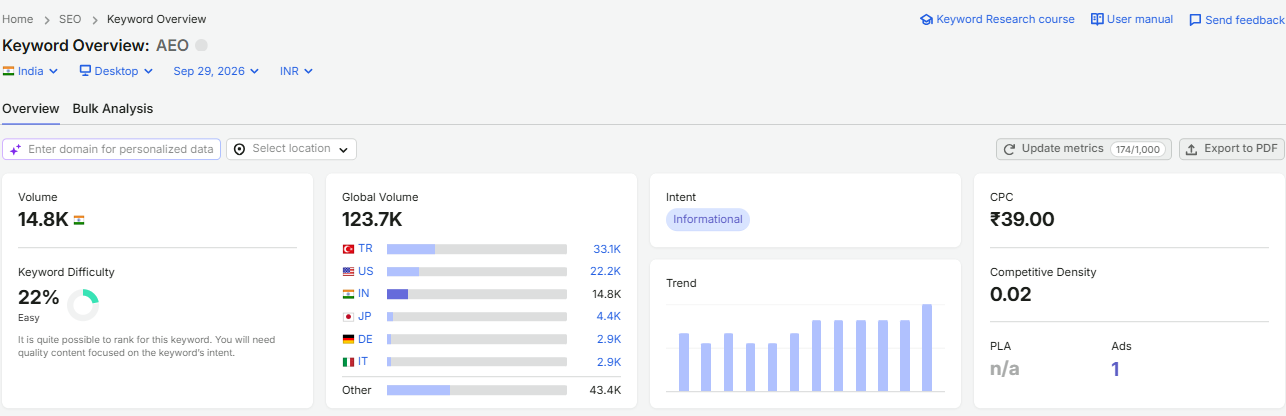
The number I care about most here is not 14.8K.
It is the informational intent.
That tells me the searcher primarily wants to learn. So the page needs to explain, demonstrate and guide. A heavily promotional landing page would be a poor match for that expectation.
You can repeat the same workflow using the Semrush Keyword Magic Tool. Enter one seed topic, choose the correct country database and review the resulting keywords by intent, volume and difficulty. Semrush itself recommends starting with a seed keyword and then using the resulting related terms and topic groups to explore demand. Semrush
But I would never make a content decision from the tool alone.
Google’s autocomplete and People Also Ask results around this topic expose questions such as:
AEO vs GEO
AEO best practices
AEO tools
What is an AEO strategy?
What is AEO vs SEO?
How do I improve my AEO?
Together, those queries tell us something more useful than volume: the reader wants both understanding and implementation.
That is the real purpose of keyword research. The tool finds demand. The strategist decides what that demand means for the page.
Once we know the question, the next job is making sure the answer is not buried.
2. Put the Direct Answer Before the Long Explanation
If a heading asks a clear question, answer it before expanding the topic.
I still see older blog structures that spend several paragraphs warming up the reader before they reach the useful point.
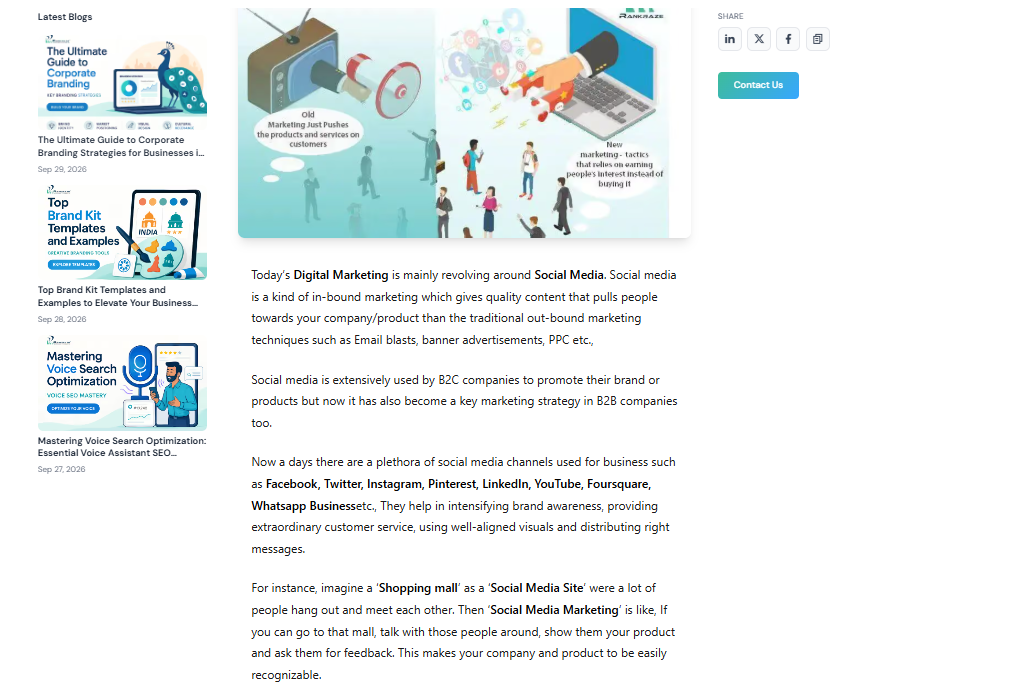
One older Rankraze article follows that pattern. It opens with several paragraphs of background about social media before the core explanation becomes clear.
The stronger structure is:
Question → Direct answer → Explanation → Example → Supporting detail
If the heading is “What is AEO?”, define AEO first.
Then explain why it matters, where it overlaps with SEO, what it affects and how the reader can use it.
This does not mean every answer needs to be reduced to two sentences. Detailed topics still deserve detailed explanations. The difference is that depth comes after clarity.
A quick editorial test helps:
If someone only reads the first paragraph under this heading, will they understand the core answer?
If not, I would rewrite the opening.
Direct answers solve the individual question. The next challenge is organising related questions without creating a messy collection of overlapping pages.
3. Build Topic Coverage Around Related Search Intent
Good topic coverage connects related questions without creating a new article for every keyword variation.
Take AEO as an example.
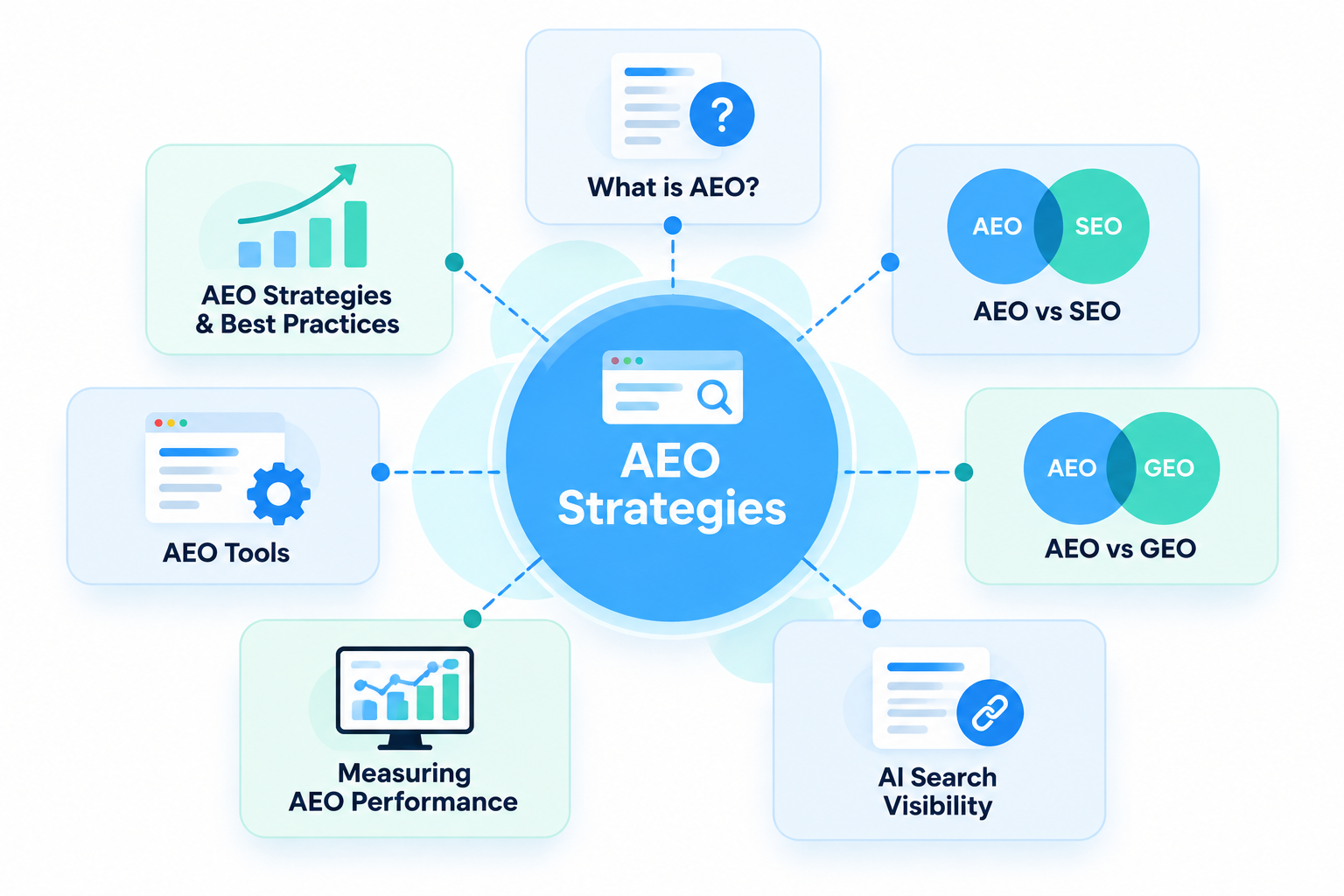
A broader content ecosystem could include:
What is AEO?
AEO strategies
AEO vs SEO
AEO vs GEO
AEO tools
AI search visibility
measuring AEO performance
But I would not publish seven pages simply because seven phrases exist.
First compare the intent.
If “AEO strategies” and “AEO best practices” produce essentially the same search expectation, they may belong on one strong page. If “AEO vs GEO” consistently expects a direct comparison, a separate comparison article may make sense.
This is also where internal linking becomes useful.
If the reader reaches the SEO/GEO comparison and needs more depth, send them to the Rankraze GEO guide. If they need the wider planning context, the digital marketing strategy guide is a more relevant next step.
The link should help the reader continue the journey. It should not exist simply because we want another internal anchor.
Topic architecture creates context. Evidence is what makes the individual claims believable.
4. Support Important Claims With Real Evidence
A specific example is usually more useful than another paragraph of marketing language.
Instead of saying, “People search for our services in many ways,” I would rather show the actual queries.
For one Rankraze article about digital marketing agencies in Chennai, Search Console shows impressions from closely related searches including:
digital marketing agency chennai
best digital marketing agency in chennai
internet marketing company in chennai
digital marketing agency in chennai
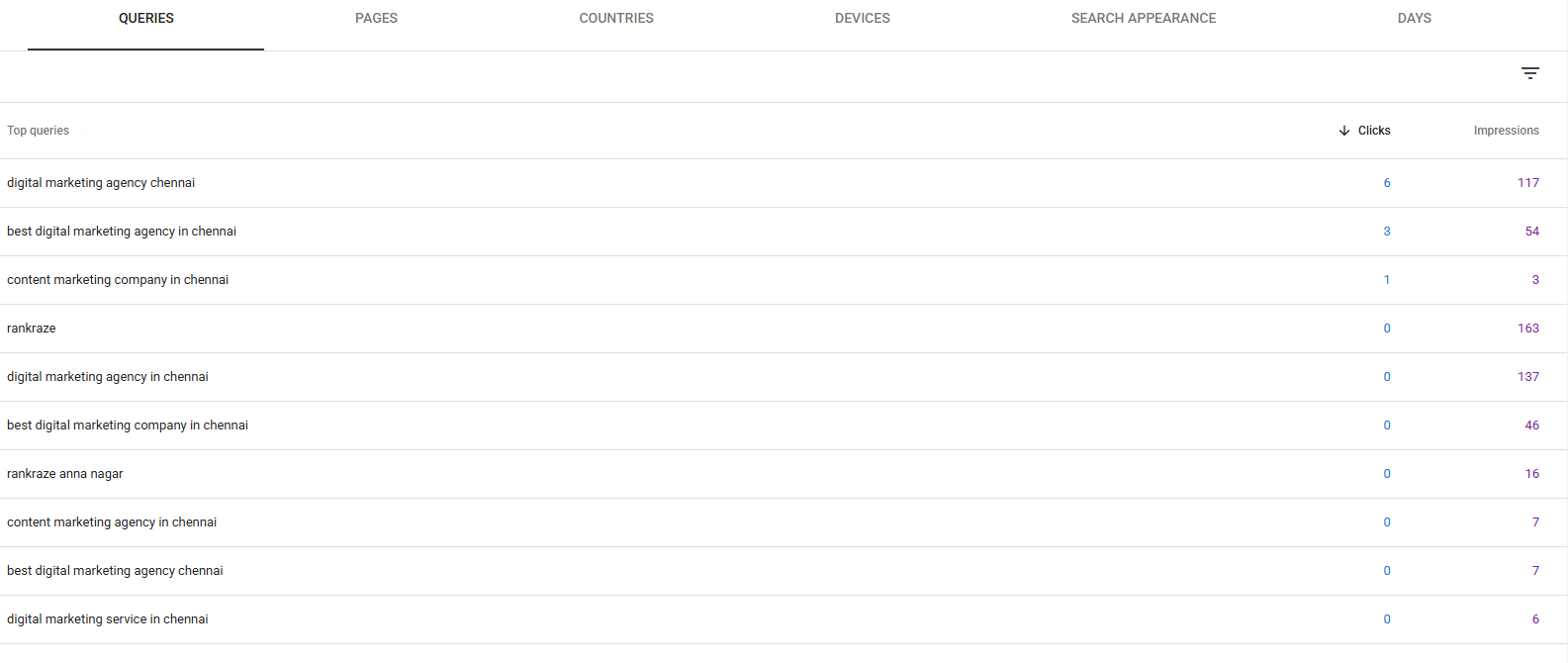
This tells me that Google already associates the page with several versions of the same underlying topic.
The next step is not to paste every variation into the copy.
I would check whether the page actually satisfies the shared intent behind those searches.
You can do the same in Google Search Console. Open the Performance report, filter by the page you want to analyse and review the Queries tab. Google recommends using this report to understand which search terms show your site and to identify pages and queries worth improving. Google Help
Ask three questions:
Do several queries express the same need?
Does the current page answer that need clearly?
Would another page genuinely add new value, or compete with the existing one?
That is how first-party data turns into an editorial decision.
Evidence improves what the page says. Structured data helps clarify what the page represents.
5. Use Structured Data to Clarify Page Meaning
Structured data gives search engines explicit information about the page and the entities connected to it.
Google defines structured data as a standardised format for classifying page content. For articles, it can clarify properties such as the headline, author and publication information. Google for Developers
Rankraze already has organisation and local-business structured data detected on parts of the site.
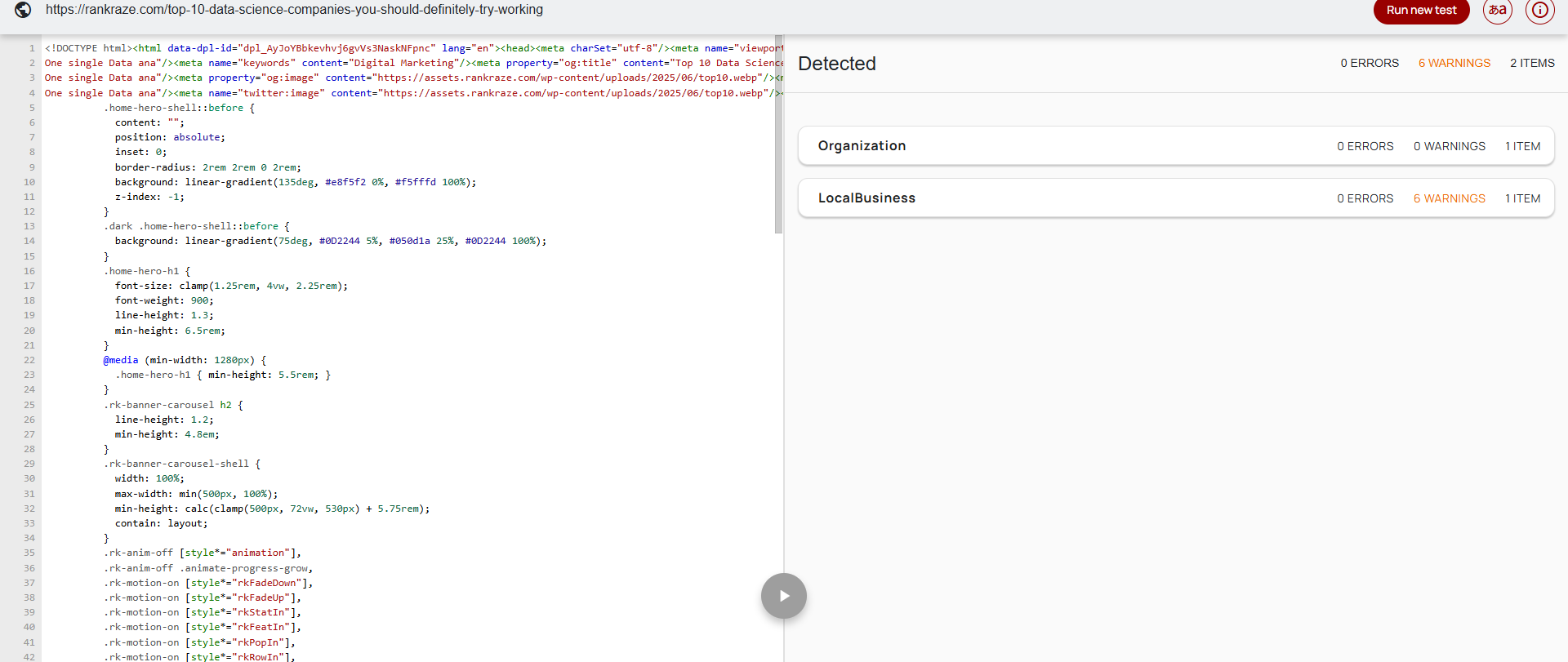
That is useful, but I would keep one limitation clear:
schema does not guarantee an AI citation or ranking.
Its job is clarification.
Once this AEO article is live, the practical next step is to open Google’s Rich Results Test, enter the final article URL and check whether the expected article-level markup is detected correctly. Google recommends validating structured data and fixing critical errors before relying on it. Google for Developers
For organisation information, Google also recommends using the most appropriate Organization subtype and including relevant business details where applicable. Google for Developers
Structured data clarifies the entity technically. The visible article still needs to make the author and organisation clear to the reader.
6. Make Your Brand and Authors Easy to Identify
A reader should not have to guess who created the article or which company stands behind it.
For an important SEO or AEO article, I would make the author name, relevant role, company identity and updated date visible.
The purpose is not to add an “expert” badge.
It is to make responsibility clear.
If I am explaining an SEO workflow from Rankraze, the reader should be able to see who is speaking and then verify the broader organisation through our site.
Google’s structured-data guidance also supports clear organisation information because it helps Google disambiguate the business and understand administrative details such as name, URL, address and logo. Google for Developers
I would use the same principle for author information: real person, relevant role, no invented credentials.
This is where first-person experience should be selective.
I would rather write:
“When I review a content page, I check whether the reader can identify the source of the advice before I worry about adding another trust badge.”
than:
“At Rankraze, we are trusted AEO experts.”
The first statement demonstrates a process. The second only makes a claim.
Your website establishes who you are. External references show whether other sources recognise you.
7. Build Authority Beyond Your Own Website
Off-site authority is strongest when references come from relevant, credible contexts.
A backlink is not automatically valuable because the source domain has a high score.
I look at the actual linking page, surrounding topic, anchor, destination page and reason the link exists.

That distinction matters for AEO because authority is not simply a backlink count.
Useful external references can come from:
editorial backlinks
digital PR
research citations
expert contributions
reputable industry profiles
partnerships
genuine brand mentions
The most sustainable way to earn these references is to create something worth citing.
That could be original research, a benchmark, calculator, detailed case study, template, dataset or useful guide.
Rankraze’s SEO services in Chennai take the same approach to off-page SEO: competitor backlink analysis, resource links, digital PR, citations and content-led link earning, while avoiding low-quality link schemes.
Building authority takes time, though. Before creating another asset, I would check whether existing content already has visibility that can be improved.
8. Improve Existing Content Before Publishing More
An existing page with relevant impressions is often a better starting point than another new URL.
Return to the Search Console example from earlier.
That Rankraze article already appears for multiple variations around digital marketing agencies in Chennai. That does not mean the page is fully optimised.
It means Google already sees topical relevance.
I would audit the existing page for four things:
Is the primary answer clear enough?
Does the page reflect the strongest recurring query intent?
Is any information outdated or unsupported?
Would another page satisfy a genuinely different intent?
If the answers show that the existing page is relevant but weak, improve it first.
My decision rule is simple:
Existing visibility + relevant intent + weak answer = update before publishing another competing page.
This is also how I avoid content cannibalisation. Publishing more URLs is not automatically content growth.
Once those updates go live, the next question is how we know whether AEO is improving.
How Do You Measure AEO Performance?
AEO performance should be measured across traditional search, AI visibility and business outcomes.
Traditional search metrics still matter. I would continue tracking impressions, clicks, ranking trends and query coverage through Search Console.
AI visibility adds another layer.
Take the search:
“best digital marketing agency in Chennai.”
In one AI-generated response, Rankraze appeared alongside Social Beat, echoVME Digital, Weboin, Digital SEO and other Chennai agencies. The response also explicitly clarified that the list was not a ranking.
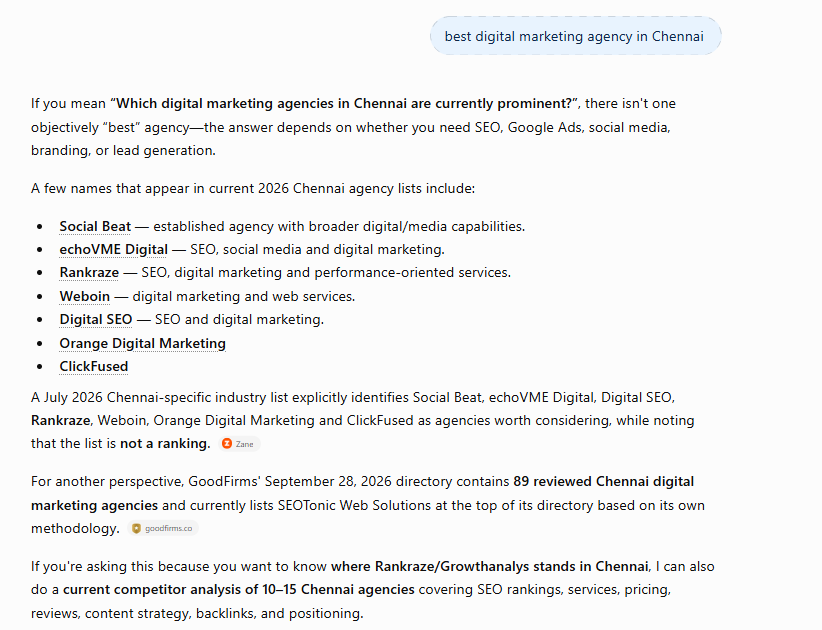
That distinction matters.
The screenshot proves visibility in that answer.
It does not prove that Rankraze permanently ranks in that position, that every user will receive the same answer or that the mention generated leads.
For ongoing AEO monitoring, I would choose a small set of commercially important questions and check them consistently.
Record:
whether the brand appears
whether the domain is cited
which competitors appear
which sources the answer references
whether visibility changes over time
This is becoming more relevant because Google reported in 2026 that AI Overviews had more than 2.5 billion monthly active users, and AI Mode had already passed 1 billion monthly users.
But visibility is still only part of the outcome.
The measurement chain I care about is:
Visibility → Mention → Citation → Visit → Lead
If AI visibility increases but qualified enquiries do not, the strategy may still need work.
Measurement also helps us identify the AEO tactics that sound impressive but add very little value.
Avoid These AEO Mistakes
AEO becomes ineffective when you optimise for an imagined AI algorithm instead of improving the information.
Publishing thin FAQ pages is one example. Creating dozens of near-identical answers can increase overlap without adding much value.
Stuffing conversational keywords does not make a page more suitable for AI search either. Natural, complete answers are more useful than repeating “what is AEO,” “best AEO strategies” and “AEO best practices” throughout the copy.
Treating schema as a shortcut is another mistake. Structured data helps describe the page; it does not repair weak content.
I would also avoid writing exclusively for ChatGPT or one AI product. Platforms change quickly. Clear, accurate and well-supported information is a safer foundation than trying to reverse-engineer one interface.
The same applies to AI-generated content.
AI can support research, drafting and analysis, but generic summaries of other ranking pages offer little information gain. Our guide to AI-driven content marketing in India goes deeper into using AI inside the content workflow without removing editorial judgement.
And do not abandon conventional SEO.
AEO still depends heavily on crawlability, intent, content quality, site structure and authority.
Follow This AEO Action Plan in the Right Order
Trying to optimise an entire website for AEO at once creates unnecessary work.
I would implement it in six stages.
Stage 1: Fix the Foundation
Check crawlability, indexation, page structure, analytics and basic entity information first.
If search systems cannot access or understand the site properly, later AEO work starts on weak ground.
Stage 2: Identify the Questions
Use search data, customer conversations and keyword tools to identify the questions that matter commercially and informationally.
Do not start by writing content.
Start by understanding the need.
Stage 3: Improve the Content
Make sure the correct page answers the question early, explains it properly and connects naturally to related resources.
Stage 4: Strengthen the Evidence
Add examples, screenshots, original observations, primary sources, clear authorship and appropriate structured data.
Stage 5: Build Authority
Create useful reference assets and earn relevant third-party mentions or backlinks.
Stage 6: Measure and Improve
Track search visibility, AI mentions, citations, traffic and leads.
Then use those findings to decide what deserves the next update.
[VISUAL: Rankraze AEO framework showing Foundation → Questions → Content → Evidence → Authority → Measurement → Iterate.]
The order matters.
There is little value in tracking AI citations for a page that is not indexable. There is also little value in adding schema to a page that does not answer the searcher’s question.
Fix the foundations first. Then make the information worth surfacing.
Final Thoughts
AEO works best when you stop looking for a special AI ranking trick and start improving the information itself.
Make the page easy to discover. Answer the question clearly. Support important claims. Make the source easy to identify. Build authority around the topic. Then measure what actually changes.
I would implement it in this order:
Foundation → Questions → Content → Evidence → Authority → Measurement
If your website already ranks but you are unsure how prepared it is for AI search, Rankraze’s SEO services in Chennai combine technical SEO, content optimisation, topical authority and AI-search preparation within the same search strategy.
Frequently Asked Questions About AEO Strategies
What is an AEO strategy?
An AEO strategy is a structured approach to improving how easily answer engines can discover, understand, verify and surface information from your website.
What are the best AEO strategies?
The strongest starting points are researching real user questions, giving direct answers, building useful topic coverage, supporting claims with evidence, using appropriate structured data, making authors and entities clear, earning relevant external authority and measuring AI visibility alongside conventional SEO metrics.
Is AEO different from SEO?
Yes, although they overlap heavily. SEO focuses broadly on organic search visibility and performance, while AEO places additional emphasis on making information suitable for direct answers. Strong AEO normally depends on good SEO foundations.
What is the difference between AEO and GEO?
AEO focuses on making information suitable for answer engines. GEO focuses more specifically on visibility within generative search experiences. In practice, the two concepts overlap, and the terminology is still developing.
Does schema improve AEO?
Schema can help search engines understand explicit information about a page or organisation, but it does not guarantee rankings, AI citations or rich-result visibility. Google recommends using relevant structured data accurately and validating it after implementation. Google for Developers
How do you measure AEO?
Track traditional search performance alongside a defined set of AI-search questions. Monitor brand mentions, citations, competitors and sources, then connect that visibility with website visits, enquiries and conversions where attribution is available.
.png&w=828&q=75)